
Saturday, October 3, 2026

Apple M5, Samsung S26 Chip Launches Clash with Nvidia's $2B Photonics Bet

Apple launches M5 Pro and M5 Max chips in early March 2026, while Samsung debuts the Galaxy S26 with AI-optimized processors. Nvidia invests $2B in photonics partnerships with Coherent and Lumentum to develop optical interconnects for AI data centers.

Source Trace Score12 source documents12 with a live linkVerifiability: Strong
Apple M5, Samsung S26 Chip Launches Clash with Nvidia's $2B Photonics Bet
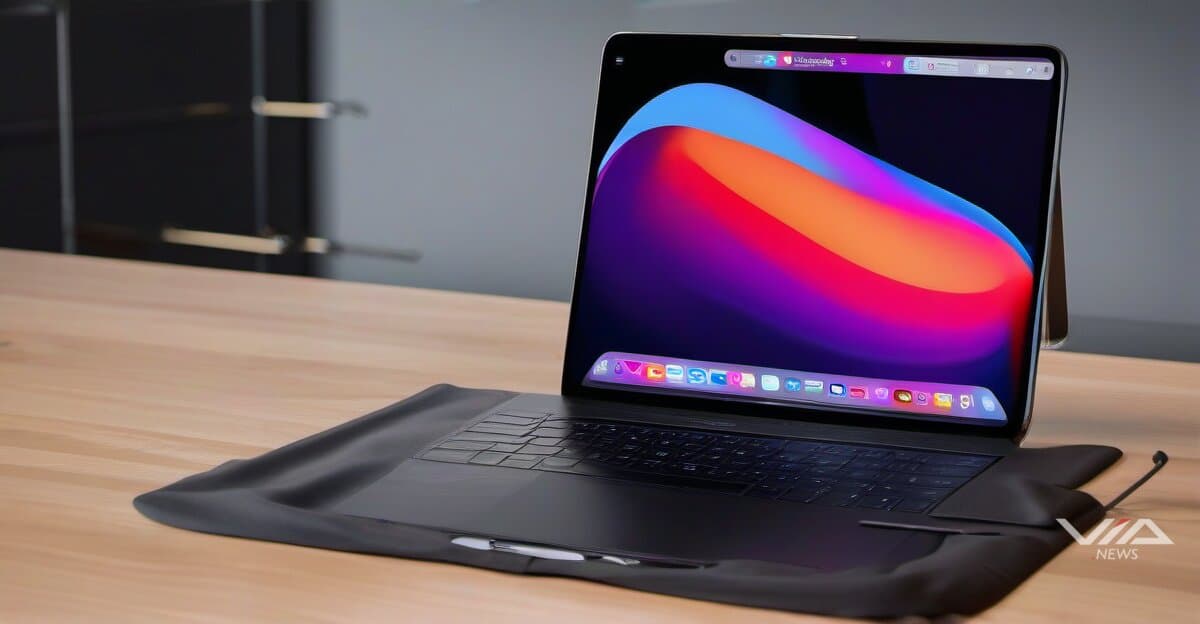
Image generated by AI for illustrative purposes. Not actual footage or photography from the reported events.

Apple launches M5 Pro and M5 Max chips for MacBook Pro in early March 2026 as Samsung unveils the Galaxy S26 with AI-optimized processors. The simultaneous releases mark a global shift in consumer hardware toward on-device AI processing across American and South Korean tech giants.

Nvidia announced $2B in photonics investments with American suppliers Coherent and Lumentum. The optical interconnect technology enables faster data transmission and lower power consumption than electrical connections in AI data centers worldwide.

Apple's M5 chips target creative professionals and developers running machine learning workloads locally on Mac computers. Samsung's Galaxy S26 processors deliver mobile AI features without cloud dependencies, addressing privacy concerns across European and Asian markets where data sovereignty regulations tighten.

The March launches test global appetite for AI-specific hardware as competition intensifies between US and Asian chipmakers. Apple continues its custom silicon strategy while Samsung competes in the $527B global smartphone market where AI capabilities now drive purchasing decisions.

Nvidia's photonics bet addresses data throughput bottlenecks in AI training clusters running large language models. Optical interconnects handle massive data flows required by AI infrastructure serving users across North America, Europe, and Asia-Pacific regions.

Analog Devices reported strong Q4 demand from industrial and data center customers worldwide as AI infrastructure spending accelerates. Massachusetts-based Lattice Semiconductor issued Q1 guidance of $158M to $172M. California's SiTime Corporation plans to acquire Japanese chipmaker Renesas' timing business, with first-year accretion expected post-close.

Industry analysts view the coordinated launches as evidence that AI hardware optimization has moved from hyperscale data centers to consumer devices globally. Companies race to deliver efficient on-device processing as models grow more sophisticated and international regulators scrutinize cloud-based AI services.

The competition spans continents with American firms Apple and Nvidia, South Korean Samsung, and Japanese Renesas all positioning for dominance in AI silicon. March 2026 will reveal which approach resonates with enterprise buyers and consumers across global markets.

Source documents

Via News is a conduit. We point to the source documents behind this report — we don't replace them. Trace any claim to its source and decide what to trust. How we source

Source Trace Score12 source documents12 with a live linkVerifiability: Strong
  1. [1]News articleYahoo Finance· February 23, 2026
    Adeia Announces Record Fourth Quarter and Full Year 2025 Financial Results
  2. [2]News articleYahoo Finance· February 18, 2026
    CAMTEK ANNOUNCES RECORD RESULTS FOR THE FOURTH QUARTER & FULL YEAR 2025
  3. [3]News articleYahoo Finance· February 18, 2026
    Earnings live: Wingstop stock surges on Q4 earnings beat, Garmin spikes, Analog Devices pops
  4. [4]News articleYahoo Finance· February 18, 2026
    Earnings live: Wingstop stock surges on Q4 earnings beat, Garmin spikes, Analog Devices rises
  5. [5]News articleIEEE Spectrum
    How and When the Memory Chip Shortage Will End
  6. [6]News articleYahoo Finance· February 26, 2026
    Introducing Aliro 1.0: A Unified Standard to Transform the Access Control Ecosystem
  7. [7]News articleYahoo Finance· March 1, 2026
    Linux Foundation Announces OCUDU Ecosystem Foundation to Accelerate Open Source AI-RAN Innovation
  8. [8]Press releaseGlobeNewswire· February 4, 2026
    SiTime Reports Fourth Quarter and Fiscal Year 2025 Financial Results
  9. [9]News articleYahoo Finance· February 5, 2026
    SiTime to Acquire Renesas’ Timing Business
  10. [10]Press releaseGlobeNewswire· February 4, 2026
    SiTime to Acquire Renesas’ Timing Business
  11. [11]News articleNasdaq· February 11, 2026
    Stocks Settle Mixed as Fed Rate Cut Chances Slip
  12. [12]News articleYahoo Finance· February 22, 2026
    5 big analyst AI moves: Nvidia stock ’likely to outperform in 2H26’

In this story · Knowledge Files

What we know · the intelligence behind this page
Live from the substrate
What we're seeing
Pharma Pipeline Catalysts and M&A Heat Up as AI-Designed Drugs Enter the Clinic
Late-September 2026 brought a dense run of clinical readouts: Novo Nordisk's CagriSema data at EASD, Lilly's ADtouch results for EBGLYSS, and Merck's tulisokibart Phase 2b result. Lilly's $2.9B Merida Biosciences acquisition and the 2026-11-14 FDA PDUFA date for ivonescimab sit alongside these as the main deal and regulatory events. AI-designed drugs such as rentosertib, and speculative AI-linked trial ventures such as QAIAx, are moving from hype toward clinical validation. Broader AI-sector regulatory and legal friction (Tesla Cybercab probe, xAI Minnesota ruling, OpenAI lawsuits) shows rising scrutiny that could spill into AI-driven healthcare.
Our read on the data ›
Signals we're tracking
Satellite-Terrestrial Network Integration Acceleration
Increased investment and launches in hybrid satellite-cellular networks across telecom industry; competitive responses from other carriers; regulatory activity around satellite spectrum; expansion of emergency/rural connectivity use cases
Patterns we're watching ›
Where sources disagree
Apple Inc.
The observation date (2025-12-27) precedes Q1 2026, making it logically impossible to have actual Q1 2026 cash data at that point. Q1 2026 would not end until March 31, 2026. Additionally, the magnitude of the difference ($45.3B vs $132.42) is implausibly large even as a normal quarterly change for Apple. While different fiscal periods can show different values, the timing relationship here suggests a data integrity issue rather than legitimate period-over-period variation.
We flag conflicts openly ›
Recently verified
✓ Checked against the original source
4,985
facts traced to their source — and we flag the ones that don't hold up.
101 entities tracked4,985 facts checked against source5,329 source documents archived
Query this data → isubstrate.com