
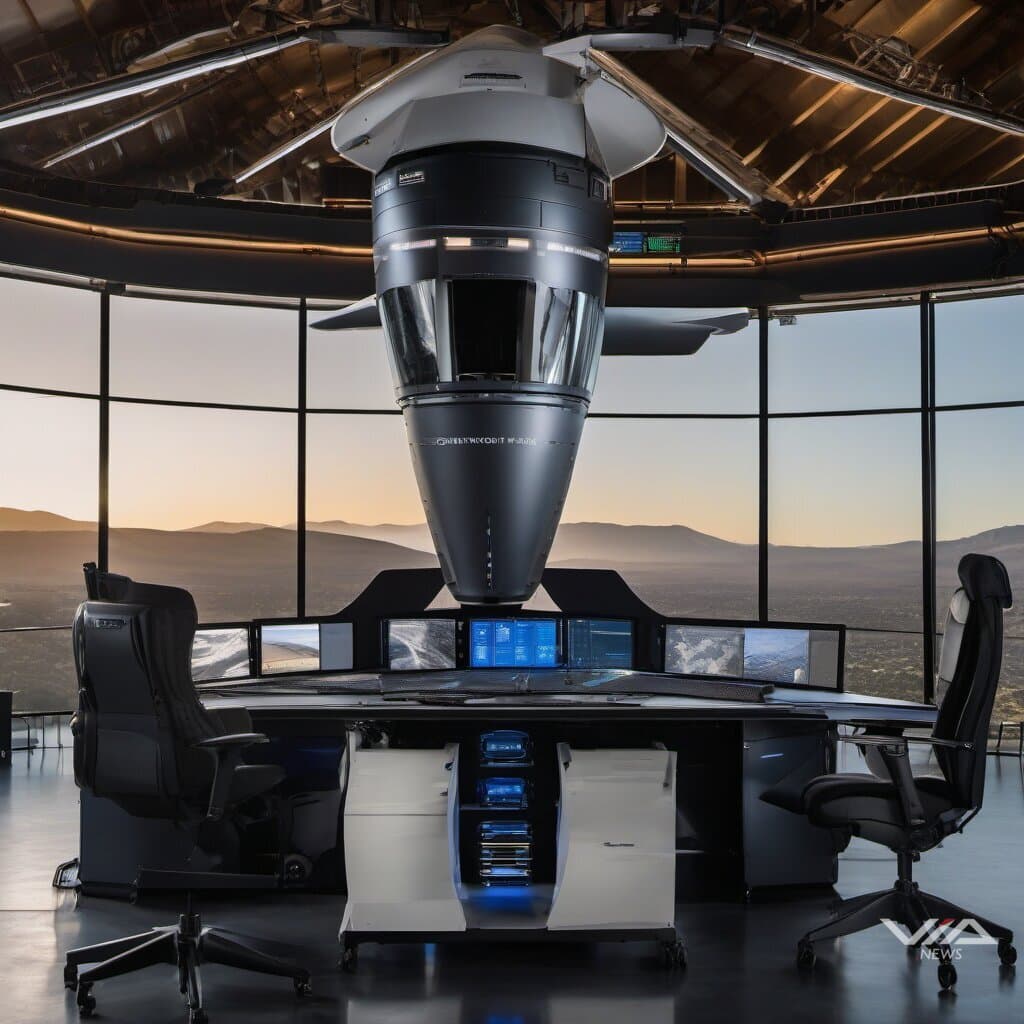
NASA is preparing the Artemis II mission, a crucial step in the United States' efforts to return humans to the Moon. The spacecraft, developed in collaboration with Boeing and Lockheed Martin, is currently undergoing final preparations in the Vehicle Assembly Building at Kennedy Space Center in Cape Canaveral, Florida. The mission aims to pave the way for future lunar exploration and establish a sustainable human presence on the Moon.
The Optimistic View
The Artemis II mission represents a significant milestone in space exploration. If successful, it will stimulate technological innovation in aerospace and space exploration sectors, creating new job opportunities in engineering, manufacturing, and related fields. The mission could lead to a series of follow-up missions that advance scientific knowledge and open up commercial opportunities in space tourism and resource extraction.
- Innovation: The development of advanced spacecraft and technologies required for the mission can drive innovation across various industries.
- Economic Impact: New jobs and economic growth could result from the increased activity in the aerospace sector.
- Scientific Advancement: A sustained human presence on the Moon could lead to groundbreaking discoveries and advancements in science and technology.
The Pessimistic View
Despite the optimism surrounding the Artemis II mission, there are significant risks and challenges. High costs and budget overruns could strain government funding, diverting resources from other critical areas. Technical failures or delays in spacecraft development could set back the entire program, undermining confidence in space exploration initiatives.
- Budget Constraints: The high cost of the mission could lead to budget overruns, potentially affecting other essential public services.
- Technical Challenges: Delays or failures in spacecraft development could significantly impact the timeline and success of the mission.
- Geopolitical Tensions: Delays and setbacks could exacerbate geopolitical tensions, particularly with China, as the race for lunar dominance intensifies.
System-Level Implications
The Artemis II mission has broader implications beyond the immediate goals of lunar exploration. It could lead to increased investment in space-related technologies and infrastructure, fostering international cooperation for space exploration. The race for lunar dominance could shift global power dynamics, with countries investing heavily in space technology gaining strategic advantages.
- Technological Investment: Increased investment in space-related technologies could spur advancements in various sectors.
- International Cooperation: The mission could foster greater international collaboration, bringing together nations to achieve common goals in space exploration.
- Strategic Advantages: Countries that invest heavily in space technology could gain strategic advantages in global power dynamics.
The Contrarian Perspective
While the United States has made significant strides with the Artemis program, the narrative often overlooks the collaborative nature of space exploration. International cooperation could shift the dynamics of the 'race,' emphasizing shared goals and mutual benefits rather than competition. This perspective highlights the potential for a more inclusive approach to lunar exploration, where collaboration among nations leads to collective progress and shared benefits.
- Collaborative Approach: Emphasizing international cooperation could lead to a more inclusive approach to lunar exploration.
- Shared Benefits: Collaboration among nations could result in shared benefits and collective progress in space exploration.
- Shift in Dynamics: Focusing on shared goals could shift the dynamics of the 'race' towards a more cooperative and mutually beneficial framework.
Multiple Perspectives
The Optimistic Case
Bulls see: The Artemis II mission as a pivotal moment in space exploration, marking the beginning of a new era of technological innovation and economic opportunity. With successful completion of its objectives, this mission could lead to a series of follow-up missions that establish a sustainable human presence on the moon. This not only advances scientific knowledge but also opens up commercial opportunities in space tourism and resource extraction. Bulls believe that the stimulation of technological innovation in aerospace and space exploration sectors will create new job opportunities in engineering, manufacturing, and related fields, driving economic growth and technological advancement.
The Pessimistic Case
Bears worry about: The high costs and budget overruns associated with the Artemis program, which could strain government funding and divert resources from other critical areas. There is also concern over potential technical failures or delays in spacecraft development, which could set back the entire program and undermine confidence in space exploration initiatives. Bears fear that if the Artemis program faces multiple technical failures and budget overruns, it could result in significant delays in achieving its goals, leading to a substantial drain on government resources and causing a reduction in other essential public services. Additionally, this could exacerbate geopolitical tensions with China, potentially shifting the focus away from collaboration towards competition.
The Contrarian Take
What the consensus might be missing: While the United States has made significant strides with the Artemis program, the narrative often overlooks the collaborative nature of space exploration and the potential for international cooperation. Instead of framing space exploration as a race, there is an alternative perspective that emphasizes the benefits of global partnerships. By fostering international collaboration, the dynamics of space exploration could shift towards shared goals and mutual benefits, rather than a competitive 'race'. This approach could lead to more efficient use of resources, shared risks, and accelerated advancements in technology and science.
Deeper Analysis
Second-Order Effects
The preparation for the Artemis II mission is likely to trigger several second-order effects that extend beyond immediate technological advancements. One significant consequence is the potential acceleration of commercial space activities. As governments invest more in space exploration, private companies might see increased opportunities for partnerships and contracts, leading to a surge in commercial space ventures.
Another indirect consequence is the stimulation of educational programs focused on STEM fields. With heightened interest in space exploration, schools and universities may prioritize these subjects, potentially leading to a more skilled workforce in the future. This could also inspire a new generation of scientists and engineers dedicated to pushing the boundaries of human knowledge and capability in space.
Stakeholder Reality Check
Workers: While the mission creates job opportunities, it also presents challenges. The intense focus on space exploration can lead to a brain drain from other critical sectors, as highly skilled professionals are drawn towards aerospace roles. Additionally, the pressure to meet deadlines and ensure safety can result in high-stress environments for workers involved in the project.
Consumers: The public may benefit from technological spin-offs and innovations derived from space research, such as improved materials, medical devices, and communication systems. However, there is also a risk of public funds being diverted from social programs to space initiatives, which could impact areas like healthcare and education.
Communities: Local communities near space facilities, such as the Kennedy Space Center, might experience economic growth due to increased activity and tourism. However, they could also face environmental concerns and logistical challenges related to the expansion of space operations.
Global Context
- Asian Markets: Countries like Japan and South Korea, which have close ties with China, may feel compelled to increase their own investments in space technology to maintain competitive parity. This could lead to a regional arms race in space capabilities, with potential implications for security and international relations.
- European Union: The EU might seek to strengthen its own space program through the European Space Agency (ESA) to avoid becoming overly dependent on U.S. or Chinese space endeavors. This could involve increased collaboration with NASA or developing independent missions and technologies.
- Russia: Russia, traditionally a major player in space exploration, may need to reassess its strategy to remain relevant. This could involve seeking new partnerships or accelerating its own lunar exploration plans.
- African and Latin American Nations: These regions might look to leverage their geographical advantages, such as equatorial launch sites, to attract international space projects and investments, thereby boosting their economies and technological capabilities.
What Could Happen Next
Scenario Planning for NASA's Artemis Program
Best Case Scenario (Probability: 40%)
In this scenario, the Artemis II mission not only meets but exceeds its objectives, paving the way for a series of successful follow-up missions. The establishment of a sustainable human presence on the moon leads to groundbreaking scientific discoveries and technological advancements. International cooperation flourishes as nations collaborate on joint projects, sharing the costs and benefits of space exploration. Commercial ventures, such as space tourism and mining of lunar resources, begin to take off, creating new economic opportunities and industries. This scenario would likely result in a significant boost to global innovation and international goodwill.
Most Likely Scenario (Probability: 50%)
The most probable outcome involves a mix of successes and challenges. The Artemis II mission will likely achieve its primary goals, but subsequent missions may face some delays due to unforeseen technical issues or budget constraints. Despite these setbacks, the program continues to progress, albeit at a slower pace than initially planned. The United States maintains its lead in lunar exploration, but the competition from China remains intense, driving both nations to accelerate their respective programs. This scenario would still see advancements in space technology and infrastructure, though on a more gradual timeline, with a moderate increase in international collaboration.
Worst Case Scenario (Probability: 10%)
The worst-case scenario envisions multiple critical failures within the Artemis program, leading to severe delays and significant financial losses. Technical glitches and budget overruns cause a reevaluation of the program's scope and timeline, resulting in a reduction of other essential public services to reallocate funds. Geopolitical tensions escalate as China makes rapid strides in its own lunar exploration efforts, potentially leading to conflicts over territorial claims and resource rights. This scenario would have far-reaching negative impacts, including a strain on international relations and a potential setback in the advancement of space technology and exploration.
Black Swan (Probability: 5%)
An unexpected outcome that could arise is the discovery of extraterrestrial life on the moon or in nearby space. Such a discovery would dramatically alter the focus and priorities of the Artemis program, shifting the emphasis towards biological research and ethical considerations regarding the treatment of alien life forms. This scenario would likely trigger a global debate on the ethics of space exploration and could lead to unprecedented international cooperation aimed at understanding and protecting extraterrestrial life.
Actionable Insights
Actionable Insights
For Investors
The Artemis II mission presents both risks and opportunities for investors. Portfolio implications include potential growth in aerospace and technology stocks, particularly those involved in spacecraft manufacturing and propulsion systems. Watch for companies like Boeing and Lockheed Martin, which are directly involved in the project. Additionally, consider investing in ancillary industries such as satellite communications and space logistics. However, be cautious of high-risk investments due to potential budget overruns and technical delays that could affect stock performance.
For Business Leaders
Business leaders should consider strategic partnerships and investments in technologies that align with the goals of the Artemis II mission. This includes advanced materials, robotics, and life support systems. Companies can also explore opportunities in space tourism and commercial space stations. Competitive responses might involve developing proprietary technologies or acquiring smaller firms with innovative capabilities. Stay informed about government contracts and subsidies that may become available to support the mission's objectives.
For Workers & Consumers
The Artemis II mission offers significant employment opportunities, particularly in engineering and manufacturing roles. Workers in these fields may see increased demand for their skills and potentially higher wages. For consumers, while direct impacts on everyday prices are minimal, indirect effects could include advancements in technology that eventually lower costs in various industries. Additionally, the stimulation of technological innovation could lead to new consumer products and services derived from space research.
For Policy Makers
Policy makers should focus on regulatory frameworks that support the Artemis II mission while ensuring fiscal responsibility. Considerations include allocating sufficient funds to avoid budget overruns and setting up mechanisms to manage technical risks effectively. Policies should also promote collaboration between government agencies and private sector entities to maximize efficiency and innovation. Additionally, ensure that regulations do not stifle competition and encourage transparency in contract awards and spending to maintain public trust.
Signal vs Noise
The Real Signal
The genuine significance lies in the technological advancements and innovations spurred by NASA’s collaboration with Boeing and Lockheed Martin. This partnership aims to push the boundaries of space technology, potentially leading to breakthroughs that benefit various industries beyond aerospace.
The Noise
The media hype often centers around framing this as a competitive 'race' with China, emphasizing national pride and geopolitical tensions. This narrative can overshadow the broader implications and collaborative aspects of space exploration.
Metrics That Actually Matter
- Technological Milestones: Key advancements in spacecraft design, propulsion systems, and life support technologies.
- Economic Impact: Job creation and economic growth in the aerospace sector, including spin-off technologies and industries.
- International Collaboration: Participation and contributions from other countries and space agencies in joint missions and research.
Red Flags
Amythetized competition might lead to a focus on short-term goals over long-term sustainability and safety in space exploration. Additionally, the financial burden could strain budgets, diverting funds from other critical areas of scientific research and development.
Historical Context
Historical Context
Similar Past Events: The current event echoes the Apollo program of the late 1960s and early 1970s, which was a series of American space missions aimed at landing humans on the Moon and returning them safely to Earth. Another parallel can be drawn to the Space Race between the United States and the Soviet Union during the Cold War era, where both nations competed to achieve superior spaceflight capabilities.
What Happened Then: The Apollo program successfully landed astronauts on the Moon six times between 1969 and 1972. The first manned mission, Apollo 8, orbited the Moon without landing, while Apollo 11 marked the first successful landing with Neil Armstrong and Buzz Aldrin stepping onto the lunar surface. The Space Race saw significant technological advancements and national pride, but also heightened tensions and competition.
Key Differences This Time: Unlike the Apollo missions and the original Space Race, today's efforts involve international collaboration and private sector involvement. The Artemis program includes partnerships with other countries and companies like Boeing and Lockheed Martin. Additionally, the presence of China as a major competitor introduces a new dynamic, emphasizing the importance of technological innovation and strategic alliances.
Lessons from History: Historical events teach us that space exploration requires substantial investment, international cooperation, and technological innovation. The success of the Apollo missions underscores the importance of setting ambitious goals and having a clear timeline. However, the Artemis program must also address the challenges of sustainability and inclusivity, ensuring that space exploration benefits all of humanity.
Sources Cited
Secondary Sources
- NASA Readies Boeing-Lockheed Spacecraft for Moon Race with China (Bloomberg Technology)
- Iran’s Supreme Leader Acknowledges Thousands Killed In Unrest (Bloomberg Technology)
- Micron to Buy Taiwan Chip Fabrication Site for $1.8 Billion (Bloomberg Technology)
- Musk wants up to $134B in OpenAI lawsuit, despite $700B fortune (TechCrunch)
- Musk Seeks Up to $134 Billion Damages From OpenAI, Microsoft (Bloomberg Technology)
- India to Start Recovery of Taxes From Tiger Global After Verdict (Bloomberg Technology)
- TCL’s PlayCube projector is more fun than a Rubik’s Cube (The Verge)
- Managers on alert for “launch fever” as pressure builds for NASA’s Moon mission (Ars Technica)
- Lutnick Warns Some Korean, Taiwanese Firms May Face 100% Chip Tariffs Unless They Invest in US (Bloomberg Technology)
- ChatGPT to start showing ads in the US (The Guardian AI)