
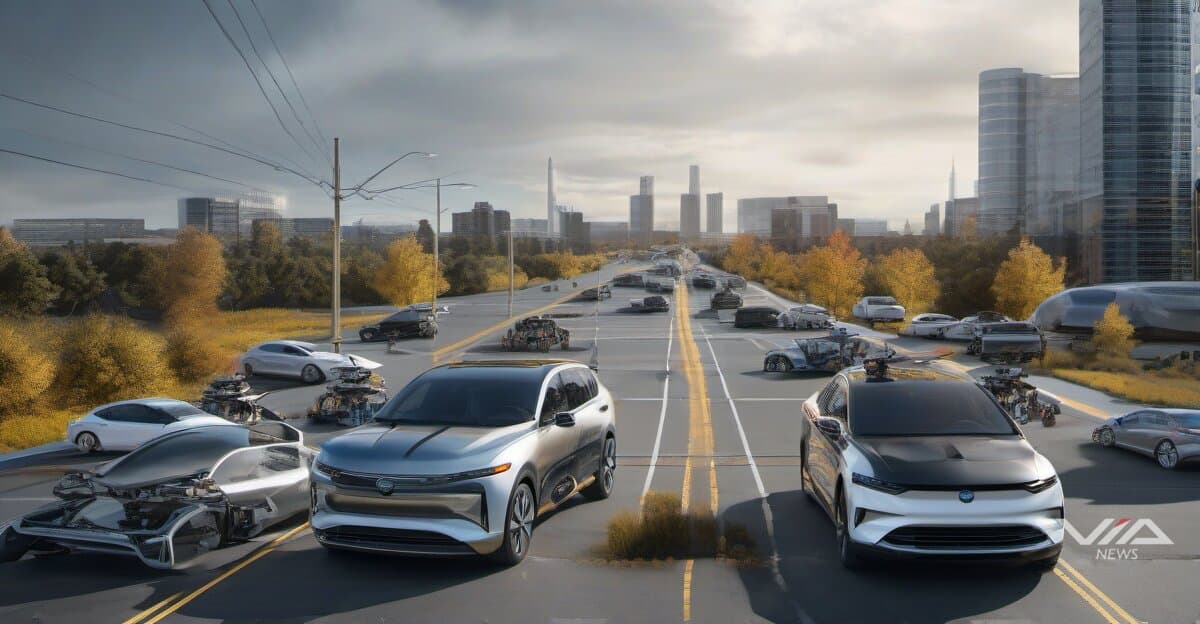
Autonomous robots are entering commercial deployment across North America, Europe, and Asia simultaneously in 2026, driven by navigation technologies reaching maturity. LiDAR sensors, SLAM (Simultaneous Localization and Mapping) systems, and neuromorphic AI now enable robots to operate reliably in unstructured environments outside factory settings.
U.S.-based Artificial Intelligence Technology Solutions released RADSight 2.0, an AI security platform reducing power consumption by more than half. The company expects recurring revenue as Fortune 500 clients reorder. European industrial automation leaders Swisslog and Kollmorgen are deploying autonomous guided vehicles and manufacturing systems, while service robots enter dishwashing and home assistance markets globally.
The technology stack includes event-based vision systems from Swiss-German firm iniVation AG, which process visual data like biological retinas rather than traditional frame-based cameras. These neuromorphic sensors process only motion changes, not continuous video streams, cutting power requirements critical for battery-powered robots operating full shifts.
Robotaxi services represent the highest-profile consumer deployment, with operators across multiple continents working toward 2026 launches. These vehicles rely on the same core technologies—LiDAR for environment sensing, SLAM for real-time mapping, and AI for decision-making—now proving capable in urban environments worldwide.
Regulatory frameworks are adapting internationally. U.S. Department of Defense sourcing changes affect autonomous system procurement, while vehicle homologation processes in Europe and Asia establish safety standards. U.S. Medicare coverage is expanding to include assistive robotics like Lifeward exoskeletons, signaling government recognition of robotic systems as mainstream technology.
Medical applications are advancing globally. "Everyone's hand is different. So the surgery should be personalized," said Xiangyi Cheng, describing AR-assisted robotic surgery systems that adapt to individual anatomy. Cheng advises students to "focus on mathematics" as the foundation for engineering these systems.
The convergence of hardware providers, AI platforms, and industrial automation companies into a single ecosystem marks a shift from isolated pilots to integrated commercial offerings. Forty documented deployments and product launches indicate technology readiness has crossed a threshold, with autonomous navigation reliable enough for consumer-facing applications where failures carry reputational and safety costs.