
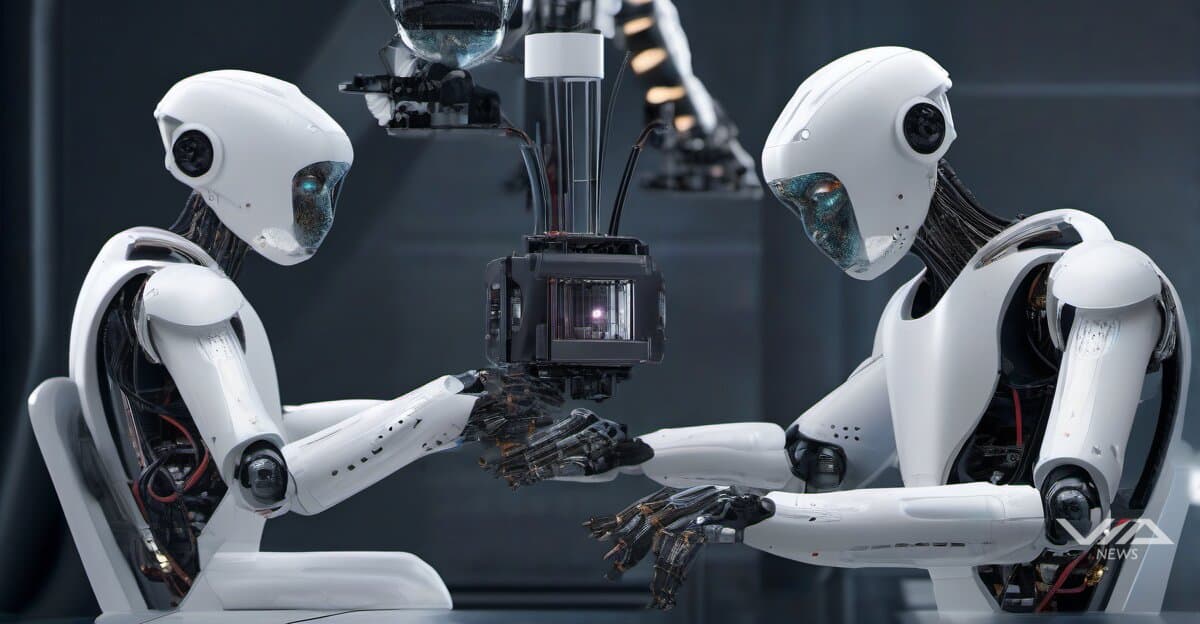
Boston Dynamics completed final testing of its Atlas research platform with support from the RAI Institute, exploring maximum capabilities in full-body control and mobility. The company's enterprise Atlas platform has begun commercial deployment in markets worldwide.
The shift from research to deployment mirrors global momentum in commercial robotics. Autonomous delivery vehicles are entering road trials across North America, Europe, and Asia, while warehouse automation systems now target applications like shoebox handling that previously resisted mechanization.
Regulatory frameworks are evolving internationally to support commercial deployment. US Department of Defense sourcing requirements and vehicle homologation standards in Europe and Asia provide clearer pathways for autonomous systems to operate in public spaces beyond controlled industrial environments.
Humanoid robots have achieved new mobility benchmarks in dynamic balancing and obstacle navigation. These advances build on control systems and kinematics research, accelerated by convergence of embodied AI and neuromorphic sensing technologies that enable real-time environmental processing and autonomous decision-making.
The warehouse automation sector is expanding beyond traditional palletizing and conveyor applications. Current systems handle irregular objects and adapt to variable environments, addressing operational gaps across global logistics networks that previously required human workers.
Manufacturing facilities worldwide are integrating autonomous robots for precision assembly, quality inspection, and material transport. The technology operates without extensive facility modifications, reducing deployment barriers for manufacturers in developed and emerging markets.
Industry confidence has reached 82% for commercial viability as the timeline from research labs to revenue-generating deployments compresses. Hardware costs are declining while AI capabilities improve, enabling companies to move beyond pilot programs to multi-unit deployments across operational facilities.
The convergence of edge computing, advanced sensors, and AI-RAN infrastructure is removing technical barriers to widespread adoption. Global robotics investments reflect expectations that commercial humanoid and autonomous systems will transition from niche applications to mainstream industrial deployment within current investment cycles.