
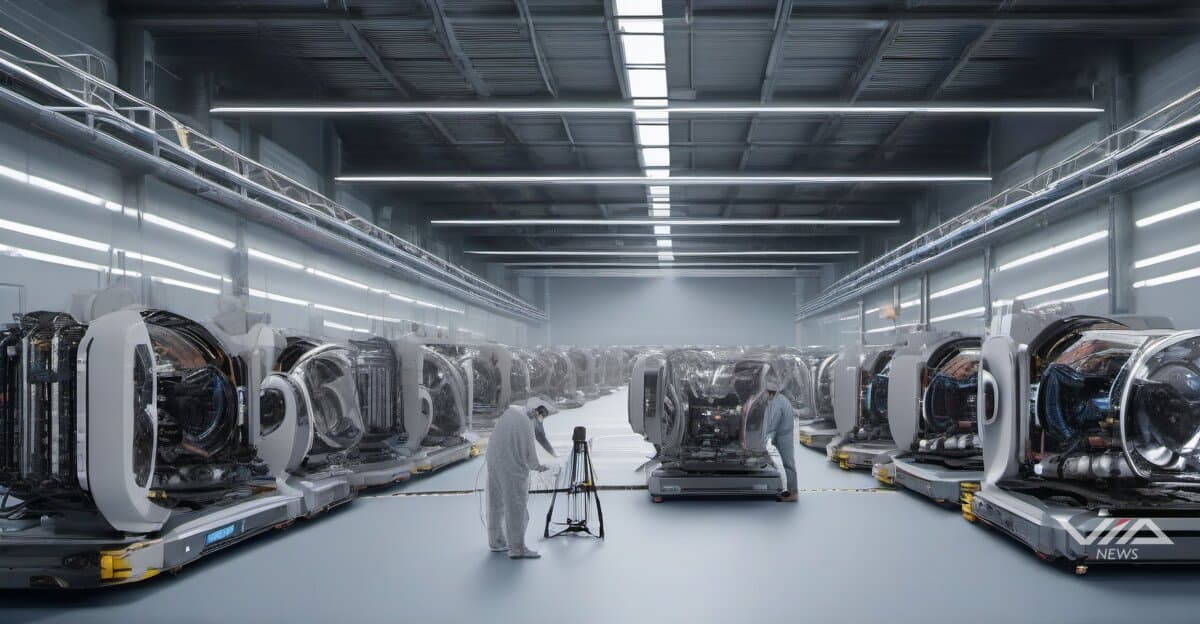
Robotics engineers trained at OpenAI and similar institutions are launching warehouse automation startups across North America, Europe, and Asia, bringing physical AI from research labs to industrial-scale deployment.
Polish startup Nomagic secured venture funding for its Shoebox Picker, a specialized warehouse robot handling over 98% of shoeboxes on the global market. "Our vision is to bring physical AI into the heart of warehouse and logistics operations, where intelligent, autonomous systems can finally bridge the gap between digital optimization and real-world execution," said CEO Kacper Nowicki.
US-based Nuro continues autonomous vehicle testing while expanding internationally through partnerships with Lucid and Uber to scale delivery systems globally. The company's safety validation framework stems from years of commercial deployments.
Chinese robotics firms are deploying industrial automation throughout Saudi Arabia as part of Vision 2030's digital transformation. "Chinese robots are already supporting high-tech sectors such as logistics, smart manufacturing, healthcare, and smart city services," said Mohammed Alsolami, a technology analyst tracking the initiative. "They allow local companies and government entities to experiment, pilot, and scale automation solutions in months instead of years."
The migration reflects maturation in AI development. Researchers trained in foundational models now apply expertise to physical systems requiring real-time processing, sensor fusion, and dynamic environment adaptation.
Warehouse automation offers immediate commercial opportunities across markets. Global e-commerce logistics demand precision picking, sorting, and transport across facilities processing millions of daily items. Physical AI systems must operate continuously alongside human workers while adapting to inventory variations and seasonal volume spikes.
Alsolami noted accessible robotics technology "is playing a clear role in narrowing the technology gap globally," enabling emerging markets to deploy automation without first building domestic research infrastructure.
Venture funding increasingly flows toward companies demonstrating repeatable commercial traction rather than technological novelty alone. Industrial customers across Asia, Europe, and the Americas require proven reliability metrics over prototype demonstrations.