
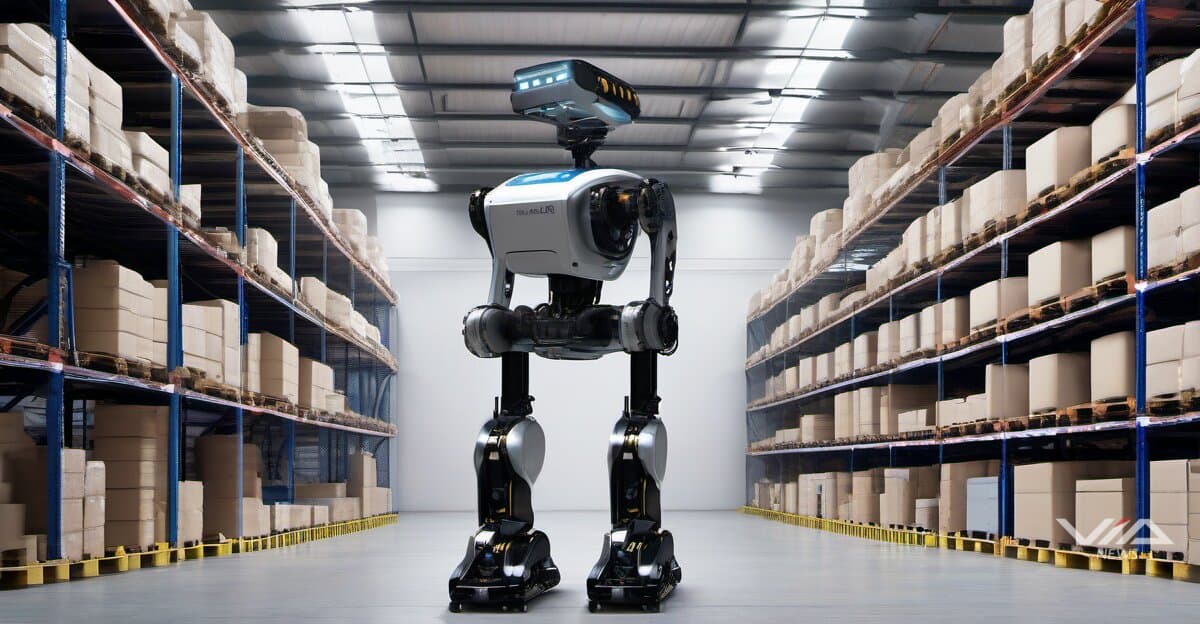
Nomagic's Shoebox Picker handles over 98% of shoeboxes on the market. The Polish startup recently secured funding to deploy physical AI systems that adapt across warehouse environments without custom programming for each installation.
Foundation models are eliminating months of engineering work previously required for each robot deployment. Companies now train AI on data from multiple sites, enabling systems to handle edge cases without scenario-by-scenario coding.
Chinese manufacturers are accelerating global adoption by cutting hardware costs. In Saudi Arabia, Chinese robots support logistics, manufacturing, healthcare, and smart city infrastructure. "They allow local companies and government entities to experiment, pilot, and scale automation solutions in months instead of years, which is exactly what Saudi Vision 2030 requires," said Mohammed Alsolami, a regional observer.
The AGV manufacturing market is expanding as deployment barriers fall. Nuro is conducting autonomous on-road testing as robotics firms move from controlled environments to public streets. Covariant and other logistics-focused companies are deploying similar capabilities across warehouses worldwide.
Talent migration from OpenAI and Apple to robotics startups signals industry maturation. Engineers are bringing expertise in training large models and deploying AI products at scale, following investment patterns that favor physical AI over software-only solutions.
"Our vision is to bring physical AI into the heart of warehouse and logistics operations, where intelligent, autonomous systems can finally bridge the gap between digital optimization and real-world execution," said Kacper Nowicki, Nomagic's founder.
The transformation spans industrial and consumer segments, from fulfillment centers to last-mile delivery. As models improve and hardware costs drop, companies are targeting general-purpose systems rather than specialized machines. Systems that once required months of custom development now adapt within weeks.