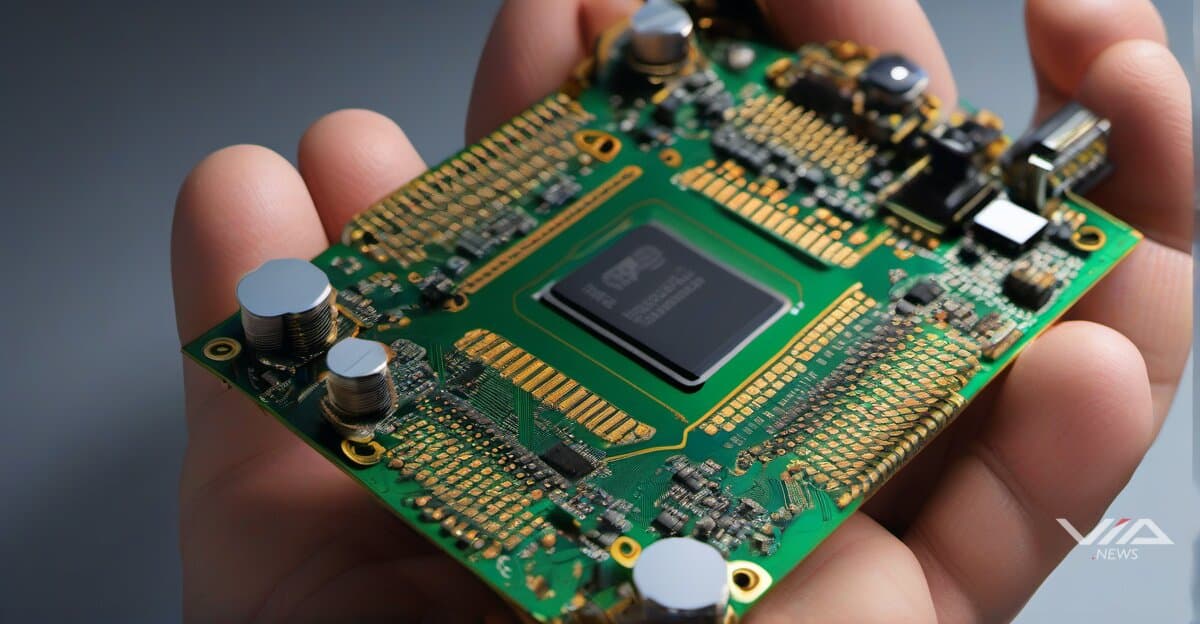
Huawei plans to ship 750,000 units of its 950PR AI chip in 2026, capitalizing on US export restrictions that have blocked Nvidia's advanced processors from reaching Chinese buyers. ByteDance and Alibaba are preparing orders after testing confirmed the chip meets their AI infrastructure requirements.
The 950PR's compatibility with CUDA—Nvidia's widely-used programming framework—solves a persistent challenge facing China's semiconductor industry. Previous domestic chips required extensive software rewrites, slowing adoption. Chinese developers report they can now migrate AI models from Nvidia-based systems with significantly less friction.
US restrictions introduced in recent years have barred many of Nvidia's AI chips from Chinese customers, including the H100 and A100 models that power data centers globally. Beijing responded with policies encouraging domestic chip adoption, accelerating what industry observers expected would be a decade-long transition.
ByteDance and Alibaba, which operate among Asia's largest AI computing deployments, validated the 950PR's performance in recent testing cycles. Both companies have relied on CUDA-based infrastructure, making seamless migration capability essential for any alternative chipset.
Chinese tech firms indicate they plan broader deployment of the 950PR compared to earlier domestic chip generations. The reduced software rewrite burden addresses the main bottleneck that limited uptake of previous Huawei and Cambricon offerings.
Huawei's 750,000-unit target would capture substantial market share in China's AI chip sector, where Nvidia previously dominated before export controls took effect. The volume suggests Huawei expects to replace a significant portion of the restricted Nvidia products across Chinese data centers.
The development highlights how technology export restrictions can reshape global semiconductor supply chains. Rather than halting AI development in China, the US curbs created market conditions that accelerated domestic alternatives. Companies like Huawei gained urgency to solve compatibility challenges that previously deterred customers from switching away from Nvidia's ecosystem.
The shift has implications beyond China. As countries worldwide assess semiconductor supply chain vulnerabilities exposed by US-China tensions, domestic chip initiatives have gained traction in Europe, India, and Southeast Asia. Huawei's progress demonstrates that determined investment in compatibility layers can overcome ecosystem lock-in effects.