
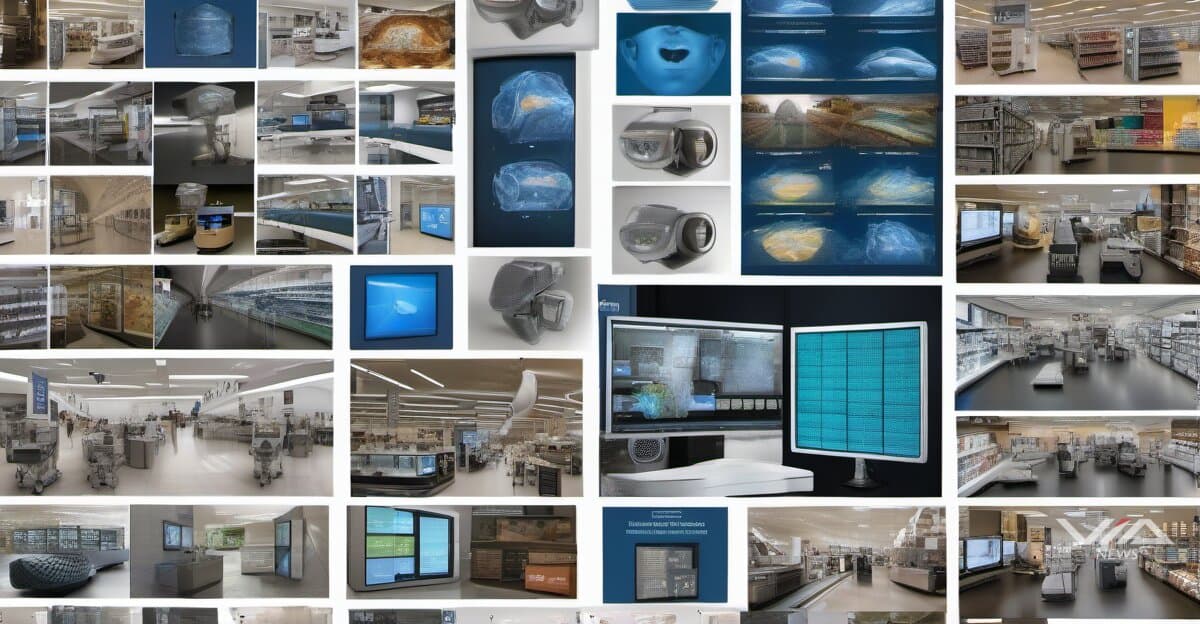
Hospitals in North America, Europe, and Asia have deployed computer vision systems that analyze medical scans for disease progression, marking the technology's shift from experimental to operational status across global healthcare networks.
The UOT framework addresses lesion tracking in cancer patients, detecting when tumors merge or split between imaging sessions. These events affect staging under RECIST guidelines used internationally, where missed merger patterns can misclassify disease progression. Healthcare facilities require 95% agreement with radiologist assessments before clinical deployment.
Retail chains have scaled vision systems beyond pilot programs. Everseen's Evercheck monitors checkout zones for theft patterns, while EXL processes surveillance feeds across store networks. These platforms identify behavior anomalies without creating facial recognition databases, balancing loss prevention against customer privacy concerns that vary by jurisdiction.
Infrastructure monitoring represents the third deployment vertical. Cities across developed economies analyze bridge stress, road surface degradation, and utility networks through sensor feeds. Maintenance teams prioritize spending based on structural risk scores rather than fixed schedules, extending infrastructure lifespan in aging urban systems.
The sector has fragmented toward specialized solutions. Companies build domain-specific models trained on medical imaging datasets, retail transaction patterns, or infrastructure sensors rather than general-purpose vision AI. Lesion tracking algorithms maintain tumor identity across scans despite size changes. Road analysis tools distinguish cosmetic cracks from structural failures requiring immediate repair.
Enterprise adoption follows validation protocols: pilot deployments in controlled settings, accuracy testing against human experts, then scaling across facilities. Retail systems balance theft detection against false positives that could trigger confrontations with customers. Medical imaging tools process thousands of scans monthly, exceeding manual review capacity.
The production deployment wave spans healthcare systems managing aging populations, retail operations facing organized theft, and municipalities maintaining infrastructure built decades ago. Computer vision has transitioned from research technology to operational infrastructure in domains requiring continuous monitoring at scale.