
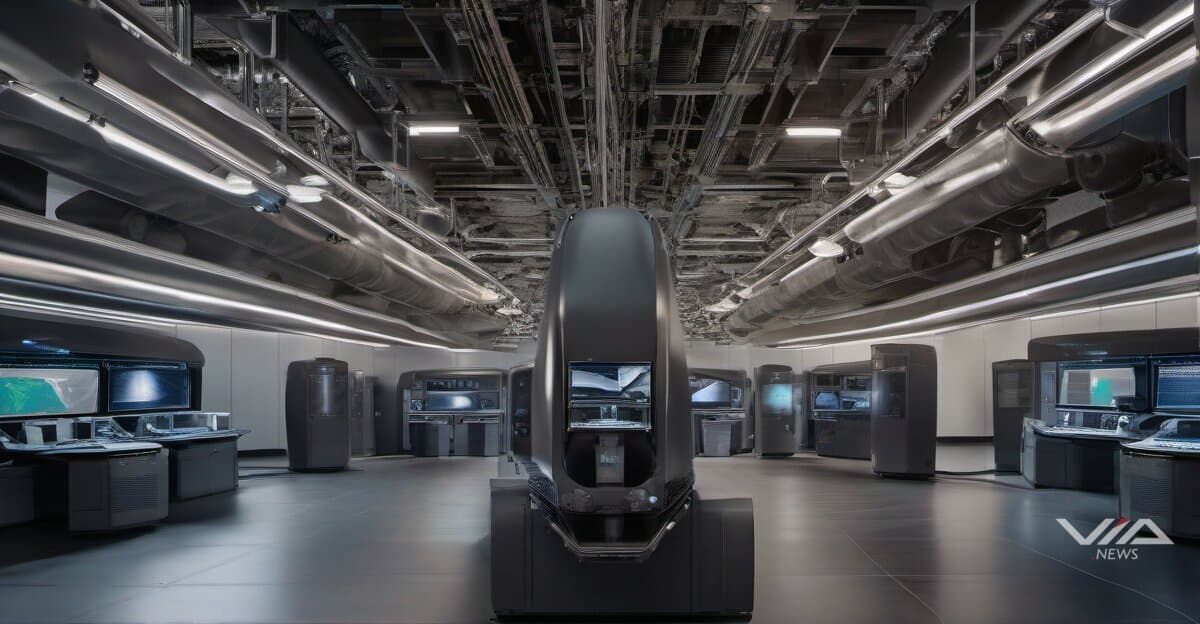
Meta increased 2026 capital expenditures to $60-65B from $48B in 2025, directing most funds to AI data center infrastructure including compute, networking, and storage systems. The spending puts Meta ahead of European cloud providers like OVHcloud but behind Middle Eastern sovereign funds investing in Gulf-region AI clusters.
AMD released ROCm 6.3 open software platform with updated libraries for PyTorch, TensorFlow, and JAX, targeting customers seeking alternatives to Nvidia's CUDA ecosystem. The release includes MIGraphX 2.11 inference engine and enhanced memory optimization for MI300 accelerators, which Asian hyperscalers including Alibaba and Tencent have tested in production.
Cisco launched Nexus 9000 switches with 51.2 Tbps throughput for distributed training across GPU clusters. The networking gear includes remote direct memory access to reduce training bottlenecks, competing with Israeli startup Mellanox-acquired technologies now owned by Nvidia.
Stanford researchers found video discriminator models trained on human task footage achieve 20%+ higher success rates on robotic tasks versus robot-only training. The approach uses Something-Something dataset clips combined with robot interaction episodes, a technique Chinese robotics firms are applying to manufacturing automation.
Scientists evaluated Kolmogorov-Arnold Networks against standard architectures, finding KANs require fewer parameters for symbolic formula tasks but show mixed image classification results. Researchers proposed TAPINN neural networks with time-adaptive pattern inference for temporal prediction tasks.
Autonomous vehicle teams are deploying explainable AI systems that provide decision rationale through audio, visualization, or haptic feedback. The approach aims to increase rider trust by surfacing detected obstacles or route logic, a priority for European regulators requiring transparency in automated driving systems.
Medical imaging applications deployed deep learning for diagnostic scans while trading firms adopted vision systems for market data visualizations. Enterprises globally are moving foundation models from research to production environments.
The infrastructure buildout reflects compute requirements as organizations scale to deployment. GPU memory capacity, interconnect bandwidth, and cooling systems constrain training runs exceeding 10,000 accelerators. Hardware vendors release annual cycles aligned with hyperscaler purchasing timelines, competing on performance-per-watt as power costs rise across data centers in Singapore, Ireland, and Northern Europe.