
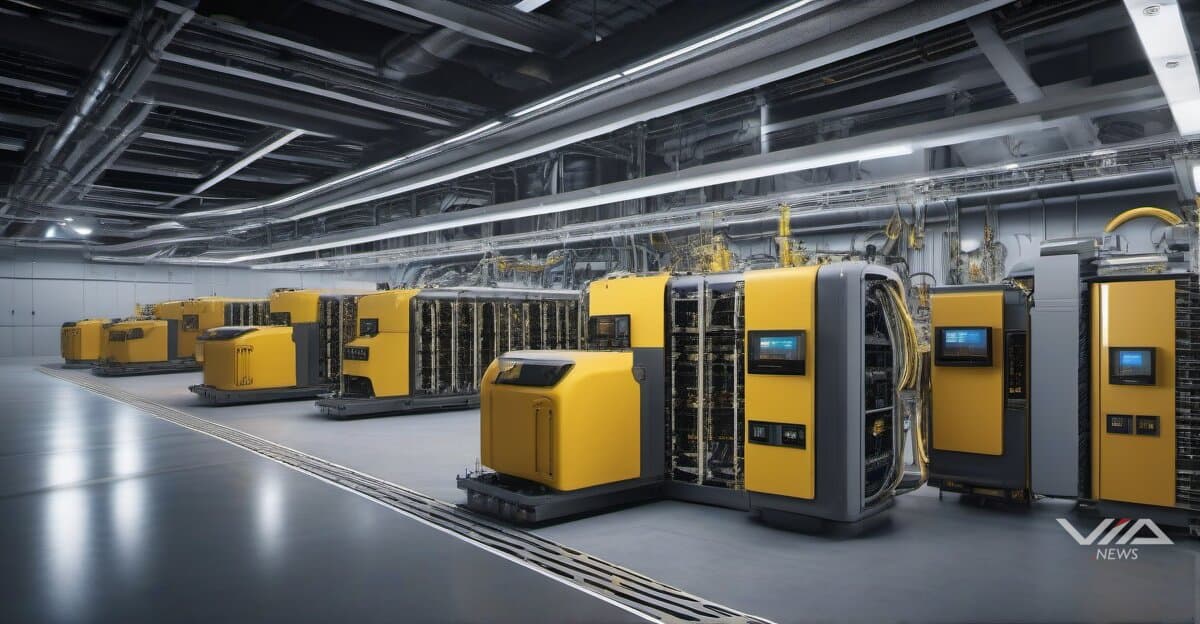
Meta signed three nuclear energy deals on January 1, 2026, part of a global scramble by AI companies to lock down power for data centers running inference and training workloads that can consume more than 100 megawatts—enough to power 80,000 homes.
The Trump administration announced an AI power initiative the same day, while DMG disclosed December 4, 2025 it's pursuing energy partnerships for its Christina Lake AI facility. Westinghouse secured a U.S. government contract for reactor deployment, and GE Vernova raised financial guidance December 9, 2025 as investors bet energy infrastructure will capture AI buildout value.
Nuclear power delivers advantages critical for 24/7 AI operations: constant output regardless of weather, compact land footprint versus solar farms, and no battery storage needed for intermittency. Data centers require uninterrupted supply with minimal voltage fluctuation, making coal and gas less viable as tech firms pursue decarbonization targets.
The pattern extends beyond U.S. borders. China's AI labs are co-locating facilities near hydroelectric and nuclear plants, while European hyperscalers face grid constraints that limit deployment speed. Energy capacity, not chip supply, may become the binding constraint on global AI expansion through 2027.
Nuclear energy stocks have tracked AI infrastructure announcements over six months, with market participants pricing sustained demand. Companies now allocate capital expenditures to power infrastructure at unprecedented rates, treating electricity as a competitive moat.
Tech giants face a choice: build near existing power sources, fund new generation capacity, or accept limits on model scale and deployment. Meta's deals signal the largest players are choosing dedicated infrastructure over grid dependence—a template likely to spread as AI workloads scale globally.
Sources:
1 Globe Newswire, "DMG Blockchain Solutions Announces 75 MW Utility Approval Expanding Christina Lake Data Center Power" (March 06, 2026)
2 Yahoo Finance, "Cenovus Energy’s Christina Lake Expansion Reshapes Growth And Valuation Story" (March 04, 2026)
3 Yahoo Finance, "Oklo (OKLO) Stock Up After Jim Cramer Called It Speculative" (March 21, 2026)
4 Yahoo Finance, "Jim Cramer on GE Vernova: “It’s Just Got the Best Book of Business”" (March 21, 2026)
5 Yahoo Finance, "Asian shares decline as hopes dim for resolution in Iran after Trump's latest comments" (March 23, 2026)