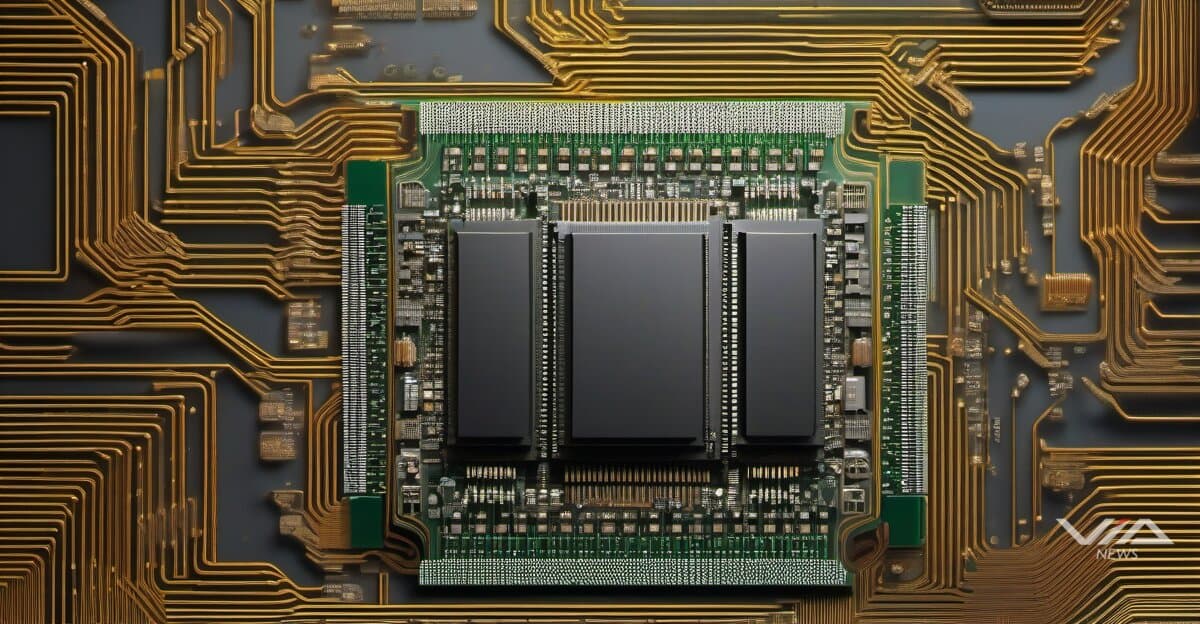
Micron's High Bandwidth Memory output for 2026 is completely sold out, the company says.1 HBM chips stack memory directly next to AI accelerators, feeding data to processors like Nvidia's GPUs faster than standard DRAM.
A full sellout more than a year ahead of production means buyers worldwide are locking in supply before it exists. From US cloud giants to Asian and European chipmakers, demand for AI accelerators is outpacing every memory manufacturer's ability to build capacity.1
Micron CEO Sanjay Mehrotra is steering the company through this global demand surge.2 HBM has become a structural bottleneck across the international AI supply chain: engineers in Taiwan, South Korea and the US can design faster processors, but those chips are useless without enough high-speed memory to feed them.
The sellout suggests Micron's HBM segment could grow faster than its overall DRAM business in coming quarters. Rivals SK Hynix and Samsung, based in South Korea, face the same crunch, meaning the bottleneck is an industry-wide issue, not a Micron-specific one. If HBM revenue and margins expand faster than the rest of Micron's memory portfolio, it would confirm AI buyers worldwide are paying a premium to secure scarce supply.
Analysts tracking the company will watch Micron's next two to three quarterly earnings reports for HBM segment revenue growth and gross margin expansion relative to prior guidance.1 A widening gap between HBM growth and total DRAM growth would confirm memory, not chip design, is now the binding constraint on AI accelerator output globally.
The dynamic matters far beyond Micron's home market. With HBM supply committed through 2026, competitors racing to ship AI chips - and cloud providers from North America to Asia and Europe racing to deploy them - face a shared ceiling on how fast they can scale, regardless of processor availability.