
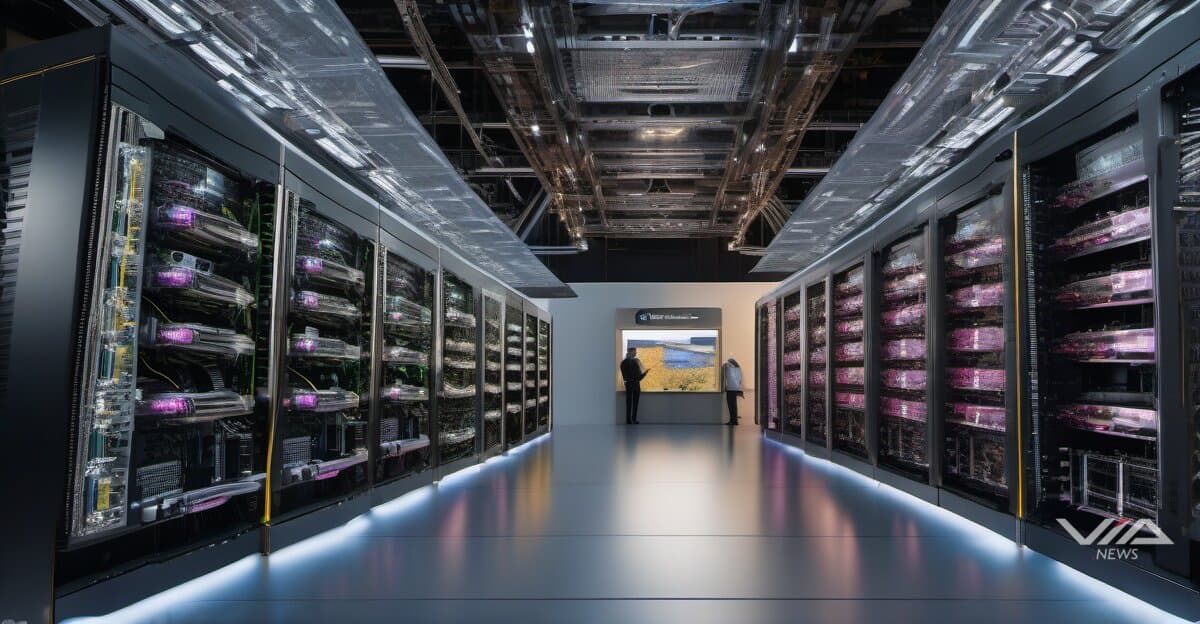
Nvidia has committed $4 billion to photonics integration as data centers consuming 1-2% of global electricity face mounting pressure to improve energy efficiency. The investment targets optical interconnects that replace electrical signals with light, potentially cutting power consumption by 30-50% in AI computing infrastructure.
Data movement between processors now consumes more power than computation itself in modern AI systems. Training large language models costs millions in electricity alone, with AI workloads driving exponential growth in energy demand. Photonics addresses this bottleneck by using light instead of electricity for chip-to-chip communication.
The efficiency push extends across global semiconductor manufacturers. Credo develops Active Electrical Cables for interconnect efficiency, while InspireSemi builds accelerated computing solutions for HPC and AI graph analytics. Apple and Samsung pursue proprietary power optimization designs in the US and South Korea.
European and Asian suppliers are deploying parallel strategies. STMicroelectronics offers connectivity portfolios for Aliro 1.0 hands-free access standards. Wolfspeed provides silicon carbide semiconductors for Toyota's electric vehicle platforms through OEM partnerships. These wide-bandgap materials operate at higher voltages and temperatures while maintaining efficiency.
GaN semiconductors deliver higher power density than silicon alternatives in data center applications. Lattice Semiconductor forecasted Q1 revenue between $158 million and $172 million, reflecting steady demand for specialized chips across global markets.
Power efficiency now determines AI system economics worldwide. Nvidia's $4 billion investment suggests photonics has matured beyond research labs into near-term production. Commercial deployment timelines remain uncertain, but the investment scale indicates mainstream adoption depends on solving these power constraints.