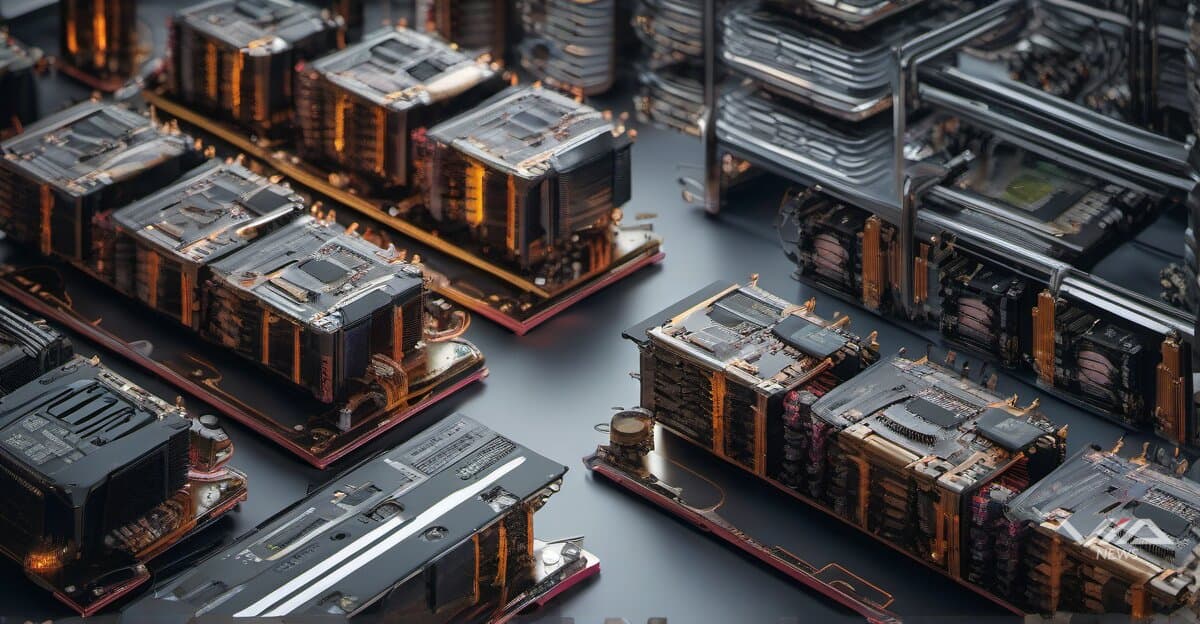
Nvidia has stopped producing H200 GPU chips as US export controls targeting China force global AI hardware suppliers to restructure their product lines. The Trump administration is considering a permitting system for GPU exports, adding regulatory uncertainty that affects tech companies across North America, Europe, and Asia.
The H200 discontinuation impacts data centers worldwide running large language models. Companies in Europe and Asia holding H200 inventory face compatibility questions as Nvidia shifts its roadmap. US semiconductor restrictions now extend beyond export bans to Pentagon supply chain designations affecting AI labs with international collaborations, creating compliance costs for cross-border partnerships.
Broadcom's strong quarterly earnings suggest traditional networking chips remain unaffected by GPU-focused controls. The divergence shows disruption concentrates in AI training accelerators rather than broader semiconductor markets serving global infrastructure providers.
Neuromorphic computing is emerging as an alternative to GPU-based systems. These chips use spiking neural networks mimicking brain architecture, offering potential 100x power efficiency gains. Intel's Loihi and IBM's TrueNorth remained research projects, but US export restrictions may accelerate commercial development in China and Europe as companies seek non-GPU architectures exempt from controls.
Models trained on Nvidia GPUs don't easily transfer to neuromorphic hardware, requiring new frameworks. Edge AI applications and robotics may adopt neuromorphic chips faster than data centers, creating a split hardware ecosystem across regions.
China is intensifying investments in domestic chip production and alternative computing platforms as US restrictions expand. European chipmakers including STMicroelectronics are exploring neuromorphic options to reduce dependence on US-controlled GPU supply chains. Regulatory compliance now shapes technology selection alongside performance metrics in a fragmenting global hardware landscape.