
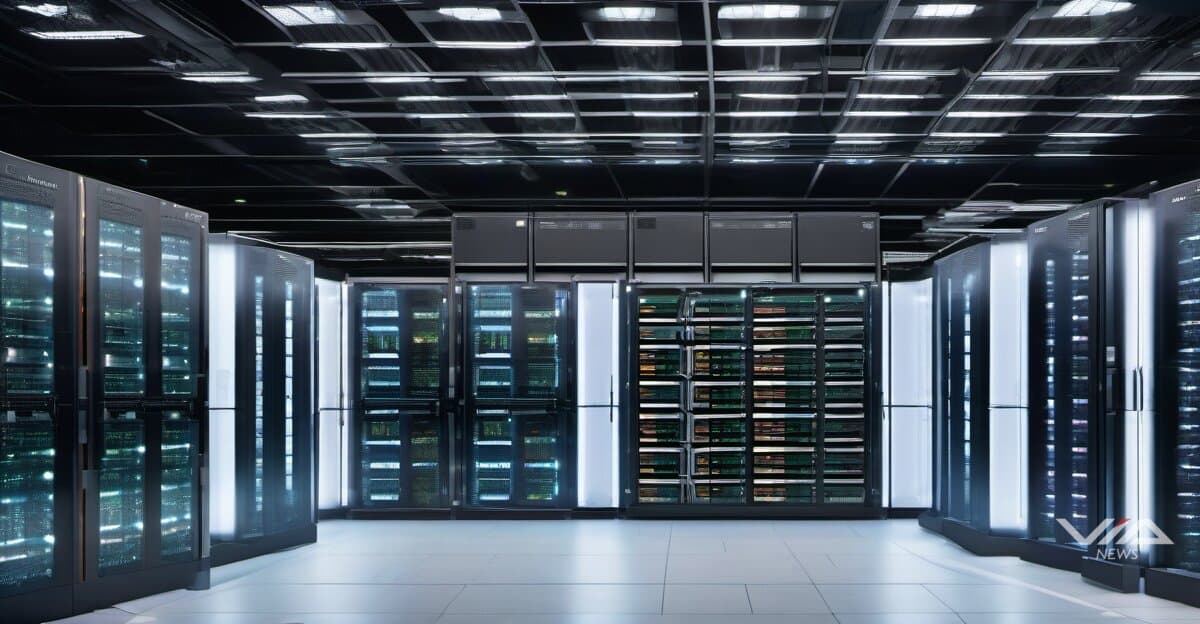
Lumentum is undershipping optical transceiver demand by 30%, with all electro-absorption modulated laser capacity committed through 2027. The shortage constrains AI datacenter expansion globally as hyperscalers from North America to Asia compete for limited supply.
The company's optical component systems order backlog exceeds $400 million, with most deliveries scheduled for late 2025. EML transceivers dominate initial 1.6 terabit designs, but adoption of 200-gigabit lane speeds is outpacing manufacturing capacity despite Lumentum increasing indium phosphide production by 20% last quarter.
Long-term supply agreements now lock in capacity through 2027, leaving minimal room for new customers. Competitors including II-VI and Coherent face identical constraints as datacenter operators worldwide place orders years ahead to secure allocation.
Optical transceivers connect servers and networking equipment in datacenters. The transition from 800-gigabit to 1.6-terabit components coincides with massive AI infrastructure investments by Microsoft, Google, Amazon, Meta, and Chinese hyperscalers like Alibaba and ByteDance.
The bottleneck threatens deployment timelines across regions. Each AI server rack requires dozens of high-speed optical connections. Companies that secured supply early gain advantage in the race to deploy AI capacity, while latecomers face delays regardless of capital availability.
Indium phosphide wafer production represents the core constraint. The semiconductor material enables high-speed optical components but requires specialized fabrication facilities concentrated in the US, Japan, and Taiwan. Building new capacity takes 18-24 months, creating a structural shortage that pricing cannot resolve.
Pricing power has shifted to component suppliers globally. Average selling prices are rising as customers accept higher costs for allocation. Lumentum achieved 65% year-over-year revenue growth while expanding gross margins by prioritizing higher-speed products for AI applications.
The shortage validates predictions that physical infrastructure would constrain AI scaling before algorithms or chips. The datacenter component supply chain, long overlooked in AI investment narratives, now determines which companies can execute their AI strategies at scale.
Sources:
1 Globe Newswire, "Willis partners with Circle Asia to launch Asia’s first insurance facility for collectors and galler" (March 23, 2026)
2 Yahoo Finance, "CNOOC Names Huang Yongzhang as Chief Executive Officer" (March 23, 2026)
3 Yahoo Finance, "Coherent’s OFC 2026 AI Optics And Nvidia Deal Spark Valuation Debate" (March 20, 2026)
4 Globe Newswire, "Coherent Demonstrates InP Technology Innovation With a Broad Range of Products" (March 17, 2026)
5 Yahoo Finance, "Marvell Technology Inc. (MRVL) Unveils Advanced Switch for AI Data Center Scale-Up Infrastructure" (March 22, 2026)