
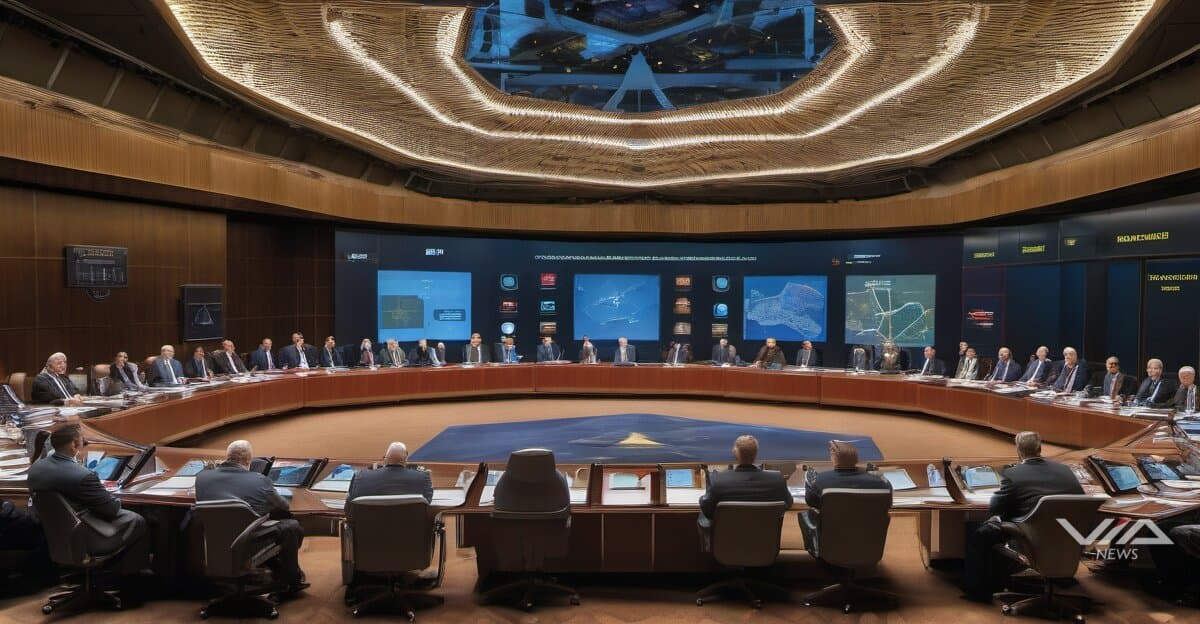
The Pentagon banned Anthropic's Claude AI from military systems, marking the latest fracture in global AI development. India simultaneously joined US semiconductor supply chains, cementing an emerging alliance based on geopolitics rather than technology. China advances AI through state coordination while Europe builds comprehensive legislation.
India's Reliance Industries chairman Mukesh Ambani committed $110 billion to AI infrastructure independent of Western systems. The investment reflects a broader shift as nations prioritize digital sovereignty over interoperability. Companies now face incompatible regulatory frameworks across the US, EU, and Asia.
Mistral AI CEO Arthur Mensch argues geography misses the point. "The fight for AI supremacy is between open versus closed systems rather than where those systems are built," he said. Google's Luke Sernau sees an "open-source free-for-all threatening Big Tech's grip on AI," framing the divide as ideological not territorial.
Legal pressures compound fragmentation. Meta faces surveillance lawsuits over AI monitoring. Google confronts wrongful death claims involving AI-generated suicide instructions. Cases span multiple jurisdictions with no international consensus on safety standards.
NTT Research's Hidenori Tanaka notes the core challenge: "AI is becoming ubiquitous, but how these computational engines actually work remains—to a surprising degree—a mystery." Regulating systems their creators don't fully understand complicates global governance.
Diverging approaches reshape the industry. Washington focuses on export controls. Brussels prioritizes comprehensive AI legislation. Beijing coordinates state-led development. New Delhi builds capacity while aligning with American partnerships. Each model reflects different values on innovation, security, and control.
Economic consequences accelerate. Companies design products for specific regulatory zones or abandon markets based on compliance costs. Nations restrict AI talent mobility, treating expertise as strategic assets. Research collaboration slows as geopolitical tensions override scientific cooperation.
No unified framework appears imminent. Separate AI ecosystems with limited interoperability are emerging, fundamentally reshaping how artificial intelligence develops worldwide.