
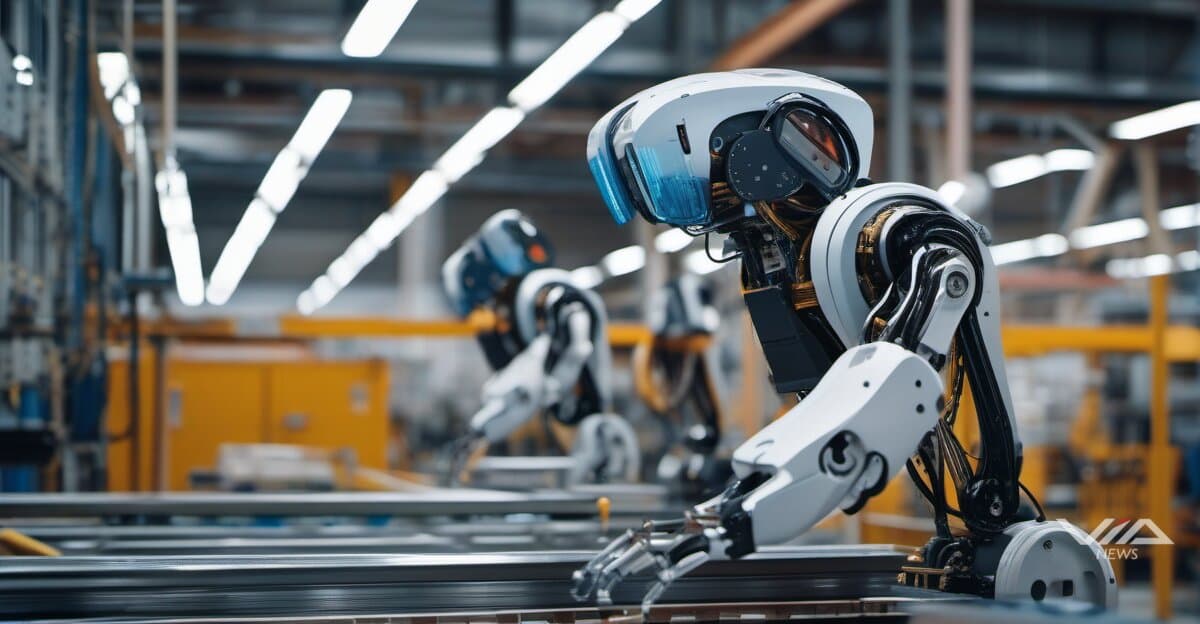
Industrial robot installations in the Americas surpassed 55,000 units annually for the third consecutive year, maintaining manufacturing automation momentum despite global economic headwinds. The UK market jumped 51% in September 2024 year-over-year, signaling adoption acceleration beyond traditional robotics centers in Asia and North America.
Battery technology constraints now limit mobile robot deployment worldwide. Hyundai, Kia, and Samsung SDI formed a partnership to develop industrial robot power systems, while Canadian firm Electrovaya announced a battery launch for July 2025 targeting autonomous manufacturing equipment.
A January 28, 2026 market report identified energy density and charge cycle durability as primary barriers. Mobile robots need 8-12 hour operational windows between charges—double current lithium-ion capacity designed for consumer electronics.
Automaker involvement signals industrial battery economics reaching viability. Samsung SDI produces EV battery cells at $100-120 per kilowatt-hour. Adapting these systems for robots could cut power costs 40% versus specialized industrial suppliers.
Autonomous mobile robots (AMRs) now represent 15-20% of new installations globally, up from 8% in 2022. Fleet operations require coordinated charging infrastructure mirroring electric vehicle networks emerging across Europe, Asia, and North America.
Regional patterns show concentration in automotive and electronics manufacturing. Americas installations remain above 55,000 units driven by reshoring and labor costs, while UK growth reflects EU-aligned digitization policies and automation incentives.
The correlation between battery partnerships and robot deployment suggests mobile automation depends more on energy infrastructure than mechanical innovation. Current deployment growth of 15-18% annually could double if battery costs drop below $80 per kilowatt-hour and energy density increases 25-30%.
Quarterly 2026 data will test whether battery partnerships accelerate adoption. The hypothesis predicts measurable correlation between announced partnerships and AMR installation volumes within 12-18 months across major manufacturing regions.
Sources:
1 Yahoo Finance, "CNOOC Names Huang Yongzhang as Chief Executive Officer" (March 23, 2026)
2 Globe Newswire, "ROSEN, SKILLED INVESTOR COUNSEL, Encourages uniQure N.V. Investors to Secure Counsel Before Importan" (March 23, 2026)
3 Nasdaq, "South Korea Market May Hand Back Friday's Gains" (March 22, 2026)
4 Yahoo Finance, "TechCrunch Mobility: Uber everywhere, all at once" (March 22, 2026)
5 Yahoo Finance, "Buying A Home Just Got Cheaper: FHFA Eases Insurance Rules, Cuts Costs For Borrowers" (March 22, 2026)