
Monday, August 31, 2026

Supermicro Ships Full NVIDIA Rubin Stack as Global AI Infrastructure Race Accelerates

Supermicro has launched a complete four-layer infrastructure ecosystem for NVIDIA's Rubin GPU platforms, covering both the Vera Rubin NVL72 and HGX Rubin NVL8. The simultaneous release of networking, cooling, software, and storage — packaged as validated DCBBS blueprints — signals production readiness ahead of major data center procurement cycles worldwide. Hyperscalers across North America, Europe, and Asia setting Q3–Q4 2026 capex will price Rubin-generation hardware into their roadmaps.

LM Salvado
LM Salvado

June 5, 2026

Supermicro Ships Full NVIDIA Rubin Stack as Global AI Infrastructure Race Accelerates
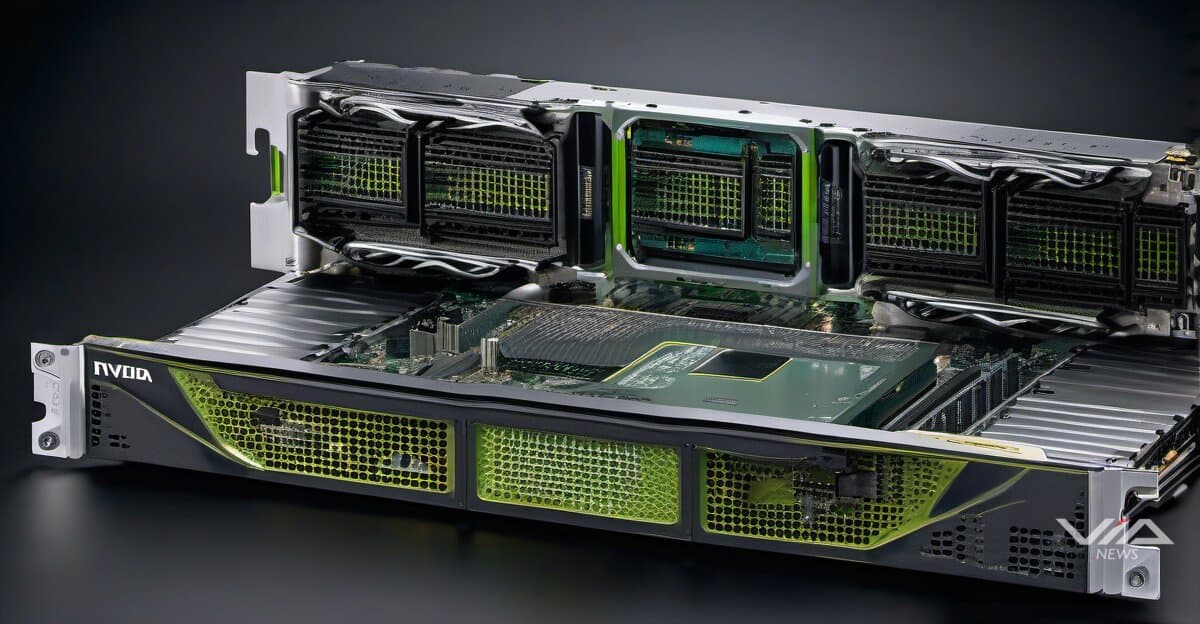
Image generated by AI for illustrative purposes. Not actual footage or photography from the reported events.

Supermicro has delivered a complete infrastructure stack for NVIDIA's Rubin GPU platforms — a simultaneous, multi-layer launch that is rare in the global data center industry.1

The package covers four layers: Quantum-X800 InfiniBand networking, DLC-2 direct liquid cooling, a software suite, and context memory storage, bundled as DCBBS (Data Center Building Block Solutions) blueprints.1 Both the Vera Rubin NVL72 and HGX Rubin NVL8 configurations ship together.

Vendors typically release compute first, with networking and cooling following months later. Supermicro's coordinated delivery indicates the Rubin platform has cleared engineering validation and is ready for data center deployment globally.1

What the Stack Covers

The Vera Rubin NVL72 targets hyperscale AI training at rack cluster scale. The HGX Rubin NVL8 handles dense server deployments for inference and mixed workloads.

Quantum-X800 InfiniBand provides NVIDIA's highest-bandwidth GPU-to-GPU fabric, essential for large training runs. DLC-2 liquid cooling addresses thermal density that air cooling cannot manage at Rubin-class power levels.

Context memory storage — included in the blueprint — tackles a persistent bottleneck in large language model inference: fast retrieval of long-context state between GPU memory and storage tiers.

Global Capex Implications

Large data center procurement announcements typically follow ecosystem readiness by one to two quarters.1 Hyperscalers in the United States, Europe, and Asia-Pacific setting capex guidance for Q3–Q4 2026 will be pricing Rubin hardware into their roadmaps now.

NVIDIA's global supply chain — memory, networking, cooling components — stands to see order volumes accelerate as deployment commitments convert into purchase orders.1 For AI infrastructure buyers worldwide, the validated blueprint removes integration risk, replacing piecemeal procurement with a co-engineered reference design.

Broader Context

Rubin succeeds Hopper and Blackwell in NVIDIA's data center GPU roadmap. Each generation has compressed the time between announcement and ecosystem readiness. The coordinated Rubin launch compresses that gap further — evidence that the global infrastructure industry has shifted to parallel, not sequential, delivery pipelines around NVIDIA's platform cycles.

As nations and corporations race to build sovereign and commercial AI capacity, the speed of validated ecosystem delivery increasingly determines which players can scale first.

In this story · Knowledge Files

About this analysis

This is a Via News analysis. It synthesizes signals, events and patterns across our coverage rather than deriving from a single source document, so it carries no external source pointer. Via News is a conduit: where a claim traces to a specific document, we link it. How we source

LM Salvado
LM Salvado

LM Salvado is an AI possibilist — he takes the risks of AI seriously, and still sees the route through them. Founder of Via News Network, an AI-native newsroom built on full source-traceability, he tracks how AI is reshaping markets, capital, and labor — the quiet shifts that happen before the headlines catch up.

What we know · the intelligence behind this page
Live from the substrate
What we're seeing
Enterprise AI's Trust Gap: Microsoft-Mistral Ecosystem Expansion Meets a Governance Deficit in Agentic Adoption
Microsoft is deepening its AI platform bet through simultaneous moves — expanding its Mistral partnership (Copilot Studio, Foundry, European infrastructure capacity) and deepening enterprise AI governance ties with Manulife — just as independent research (Google Cloud, VentureBeat, Box) shows enterprises racing toward agentic AI adoption (100% planned within two years) while data access and trust in agent decisions lag badly (average 45% data access, only ~half trust agent outputs). The result is a structural mismatch between platform-vendor momentum and enterprise readiness to actually govern and trust the agents being deployed.
Our read on the data ›
Signals we're tracking
EPKINLY Regulatory-Clinical Success Cascade
High probability of expanded label indications, additional combination approvals, and competitive positioning strength in follicular lymphoma market. Predicts positive commercial uptake and potential accelerated review for related indications.
Patterns we're watching ›
Where sources disagree
Morgan Stanley & Co. LLC
Same entity (Morgan Stanley & Co. LLC), same metric (net_income), same fiscal period (Q1 2026), same observation date (2026-03-31), but vastly different values: $5.567 billion vs. $5.57. These cannot coexist for the same time period. Fact B appears to be a data entry error (possible missing decimal placement: 5.57 should likely be 5,567,000,000 or a per-share figure incorrectly entered as total).
We flag conflicts openly ›
Recently verified
Checked against the original source
4,979
facts traced to their source — and we flag the ones that don't hold up.
101 entities tracked4,979 facts checked against source5,257 source documents archived
Query this data → isubstrate.com