
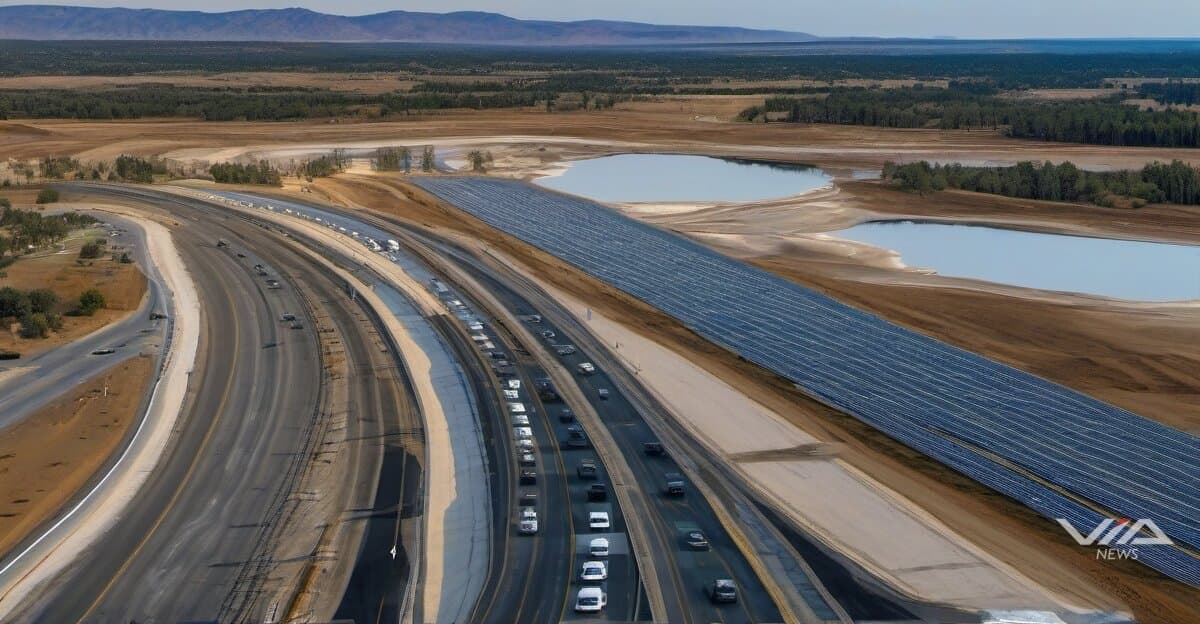
Amazon raised its 2025 capital spending to $125 billion while Alphabet budgeted $91-93 billion, pushing global hyperscaler AI infrastructure investments past $200 billion annually. The figures mark the largest peacetime technology buildout in history, rivaling semiconductor manufacturing investments across Taiwan, South Korea, and the United States.
Anthropic secured 1 million AWS Trainium2 chips under its expanded cloud agreement. OpenAI separately contracted $250 billion in Microsoft Azure services, one of the largest enterprise cloud commitments on record. Both deals reflect accelerating demand for specialized AI processors beyond traditional general-purpose computing.
The capital flood targets next-generation model training infrastructure. Amazon's Trainium chips compete with NVIDIA GPUs on large language model workloads. Google's TPU v5 and v6 processors deploy across data centers in Asia, Europe, and North America. Microsoft advances proprietary Maia accelerators alongside external chip purchases.
Micron Technology committed $24 billion to expand Singapore manufacturing capacity for high-bandwidth memory chips. Each HBM3E module costs over $1,000, with AI training clusters requiring hundreds per system. Taiwan's TSMC, operating 3nm production near capacity limits, won't reach volume output at new Arizona facilities until late 2026.
Supply constraints tighten across the semiconductor chain. TSMC, Samsung, and other foundries report 12-18 month lead times for advanced AI chips. Memory suppliers Micron, SK Hynix, and Samsung face order volumes exceeding production capacity through 2027. Equipment makers Applied Materials and ASML see surging demand for lithography systems required for chip fabrication.
Hyperscalers bet that custom silicon and vertical integration will cut costs as single model training runs reach billions of dollars. The infrastructure race extends beyond U.S. borders, with European cloud providers and Chinese tech firms pursuing similar capacity expansions despite export restrictions on advanced chipmaking equipment.
Analysts project semiconductor capital equipment orders will rise 30% in 2026. Whether global manufacturing capacity can meet demand depends on factory construction timelines spanning Taiwan, Singapore, Japan, and the American Southwest.
Sources:
1 Yahoo Finance, "Amazon Raises $54B in Record Bond Sales as Investors Place $126B Orders" (March 13, 2026)
2 Yahoo Finance, "Wall Street contemplates an open-ended conflict: Morning Brief" (March 13, 2026)
3 Yahoo Finance, "Elon Musk's Terafab bet: what it means for Tesla investors" (March 22, 2026)
4 Yahoo Finance, "Viemed Healthcare Highlights Growth, Diversification and 2026 Guidance at Investor Conference" (March 22, 2026)
5 Yahoo Finance, "NVIDIA Announces Open Physical AI Data Factory Blueprint to Accelerate Robotics, Vision AI Agents an" (March 16, 2026)