
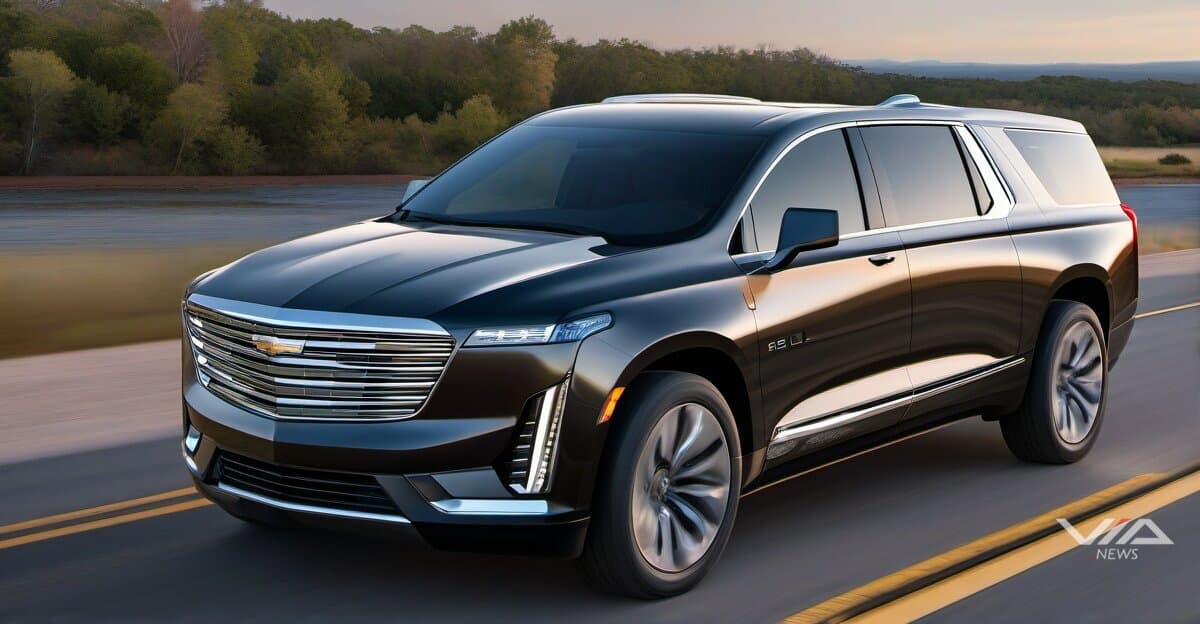
When General Motors CEO Mary Barra outlined the company's autonomous driving roadmap during the Q4 2025 earnings call on January 27, 2026, the technical details embedded in the announcement were as significant as the business milestone itself. GM is targeting a 2028 launch of SAE Level 3 autonomous driving capability on the Cadillac Escalade I — a system designed to let drivers legally divert their attention from the road entirely during highway operation.
That distinction matters enormously, and not only from an AI engineering perspective. Across three continents, regulators, automakers, and technology companies are converging on the same inflection point: the moment when the machine, not the human, carries legal responsibility for driving decisions. How that transition is managed — technically, legally, and politically — will shape the future of global mobility for decades.
A Three-Way Race with Different Rules
GM is not alone in this pursuit. Mercedes-Benz became the first manufacturer to receive internationally recognised L3 certification, with its Drive Pilot system approved in Germany in 2022 and in Nevada in 2023, operating at speeds up to 60 km/h on congested motorways. Honda's Legend sedan received L3 approval in Japan as early as 2021, though under tightly constrained conditions. Chinese manufacturers — including SAIC, BYD, and Huawei's automotive division — are advancing L3-adjacent systems at a pace that has alarmed Western incumbents, deploying in urban as well as highway contexts across a domestic market that is simultaneously the world's largest and its most willing testbed for autonomous technology.
GM's 2028 highway-focused target for the US market is thus best understood not as a singular announcement, but as an entry into a field already crowded with contenders operating under divergent regulatory frameworks. The SAE classification system itself, while widely referenced, is not universally adopted: the UN's Working Party 29 governs vehicle regulations across Europe, Japan, South Korea, and Australia under a separate framework, and China's Ministry of Industry and Information Technology has developed its own tiered system that does not map cleanly onto SAE levels.
The Sensor Fusion Architecture
GM's disclosed hardware configuration centres on a triply redundant sensing layer: LIDAR, radar, and camera arrays working in concert. This is not incidental over-engineering. Each modality compensates for the failure modes of the others in ways that are fundamental to safe autonomous operation.
LIDAR provides precise three-dimensional point clouds of the vehicle's surroundings, excelling at generating accurate depth maps even in low-light conditions. Radar penetrates rain, fog, and snow where LIDAR can degrade, and excels at measuring relative velocity of surrounding objects — critical for highway merge decisions. Cameras deliver the rich semantic context — lane markings, signage, vehicle classification — that sparse point clouds cannot easily encode.
The fusion of these streams in real time is itself a non-trivial machine learning problem. This trimodal approach contrasts sharply with Tesla's camera-only philosophy, which Elon Musk has defended on cost and scalability grounds but which critics — including several European regulatory bodies — have argued is insufficient for L3 certification under their frameworks. The hardware architecture choice is thus not merely technical; it is geopolitical. A LIDAR-dependent stack may be certifiable in Germany or Japan but economically unviable in markets where cost sensitivity is paramount.
Decision-Making Under Uncertainty
Beyond perception, the L3 classification demands a planning and decision-making subsystem capable of handling the full complexity of highway driving: lane changes, on-ramps, speed differentials, construction zones, and emergency vehicle responses. These scenarios require the AI to reason over multi-second horizons, modelling the probable future states of dozens of surrounding agents simultaneously.
Contemporary autonomous systems increasingly lean on transformer-based architectures and reinforcement learning from human driving data to develop robust highway policies. The shift from rule-based planners to learned policies has been one of the defining technical transitions of the past half-decade — one that has proceeded in parallel, and often independently, across US, European, and Chinese research ecosystems, producing systems with subtly different behavioural profiles that regulators are only beginning to develop tools to evaluate.
Highway driving, while complex, remains the controlled environment most amenable to early L3 deployment. It is no coincidence that both GM's target use case and Mercedes-Benz's Drive Pilot are motorway-first. Urban autonomous driving — the domain where Waymo operates its robotaxi fleet in Phoenix and San Francisco, and where Baidu's Apollo Go has accumulated millions of passenger trips across dozens of Chinese cities — involves an order of magnitude more edge cases and remains, by consensus, an L4 problem.
The Liability Fracture
The most consequential implication of L3 deployment is legal, not technical. When a human driver causes an accident, liability frameworks developed over a century of automotive law apply cleanly. When an L3 system causes an accident during an eyes-off interval, the question of who bears responsibility — the manufacturer, the software supplier, the mapping data provider, the insurer — remains unresolved in most jurisdictions.
Germany moved first, amending its Road Traffic Act in 2021 to assign liability to vehicle manufacturers during L3 operation. Japan followed with similar provisions. The United States has no federal framework; liability would fall to state tort law, producing a patchwork that complicates nationwide deployment. The European Union is still working through its AI Liability Directive and the revision of its Product Liability Directive, both of which have direct bearing on autonomous vehicle incidents.
For GM, launching in 2028 means navigating this legal landscape state by state, and potentially country by country as international expansion follows. The Cadillac Escalade's premium positioning may be strategic as much as commercial: high-margin buyers in regulated markets like California, Germany, or the UAE provide a defensible beachhead before mass-market deployment demands a more uniform global regulatory environment.
The Infrastructure Dependency
L3 highway systems do not operate in isolation. They depend on high-definition mapping data, reliable connectivity for over-the-air updates, and — in some implementations — roadside infrastructure that communicates directly with vehicles. This creates a dependency on national infrastructure investment that varies dramatically across markets.
South Korea and Japan have made substantial commitments to vehicle-to-infrastructure (V2I) communication standards. China's national smart highway programme has deployed V2I infrastructure along thousands of kilometres of expressway. The United States, despite federal investment through the Infrastructure Investment and Jobs Act, remains fragmented. In developing markets across Africa, South Asia, and Latin America, the infrastructure preconditions for L3 highway driving do not yet exist at scale — meaning the benefits of this technology, for the near term at minimum, will accrue disproportionately to wealthy, digitally mature nations.
What 2028 Actually Means
If GM meets its timeline, the Cadillac Escalade I will join a small and growing cohort of vehicles legally authorised to drive themselves on highways without requiring human attention. That is a genuine milestone. But the global significance of the moment will depend less on the technical achievement — which, given the trajectory of the field, is plausible — than on whether the regulatory, legal, and infrastructure ecosystems surrounding it have matured sufficiently to absorb it.
The countries that answer those questions first, and most coherently, will not merely have safe autonomous highways. They will have set the template that the rest of the world follows.