
Saturday, October 3, 2026

U.S. Bans Chinese Rare Earths in Defense Chips by 2027, Reshaping Global Semiconductor Supply

Federal regulations will prohibit Chinese-origin rare earth materials in U.S. defense systems starting 2027, forcing American semiconductor manufacturers to restructure supply chains. The move accelerates a global decoupling in chip production, with Intel's Terafab initiative leading domestic manufacturing expansion. Commercial AI chip makers are adopting similar sourcing patterns to avoid future regulatory complications.

LM Salvado
LM Salvado

April 20, 2026

Source Trace Score12 source documents12 with a live linkVerifiability: Strong
U.S. Bans Chinese Rare Earths in Defense Chips by 2027, Reshaping Global Semiconductor Supply
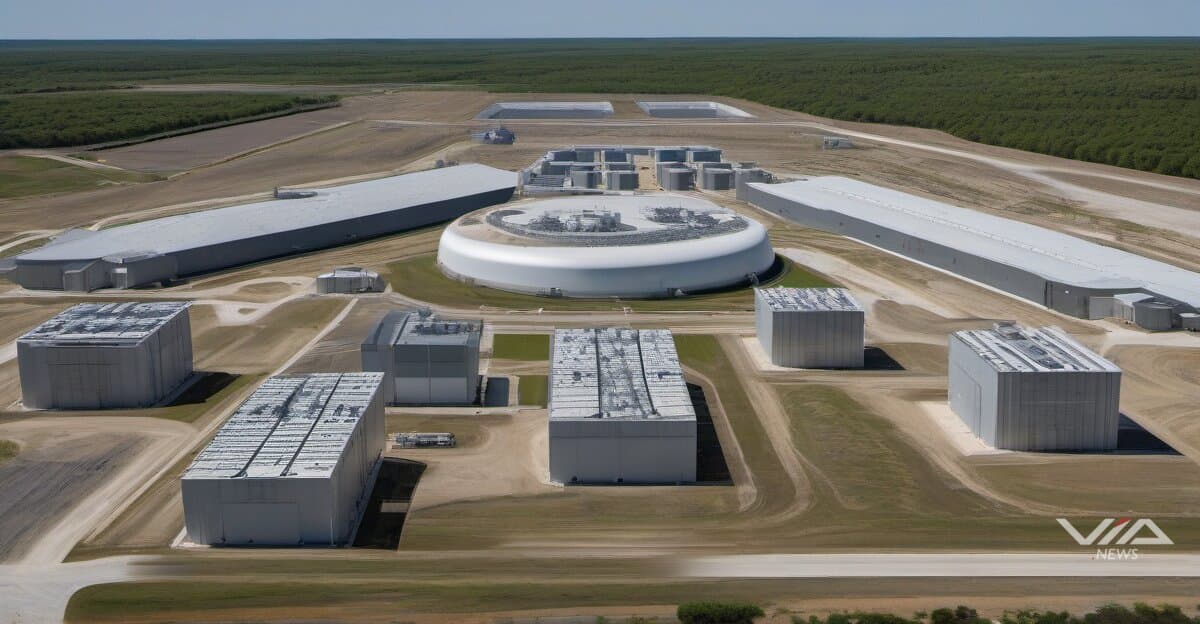
Image generated by AI for illustrative purposes. Not actual footage or photography from the reported events.

The United States will ban Chinese-origin rare earth materials in defense systems from 2027, triggering a restructuring of global semiconductor supply chains.1 Intel's Terafab initiative is driving domestic manufacturing expansion as American chip makers seek alternative sources for AI accelerator and memory production. The policy creates a bifurcated global market: legacy international networks and emerging U.S.-centric alternatives.

Equipment suppliers are capturing immediate investment. Israeli firm Camtek secured a $31 million order for AI packaging equipment, reflecting demand for non-Chinese production tools.2 Silicon Motion, which supplies NAND flash vendors worldwide, is repositioning for the supply chain realignment affecting memory and logic chips.3 Taiwan-based and South Korean manufacturers face pressure to validate material sources as U.S. defense contractors audit supplier networks.

The restructuring extends beyond military applications. Commercial AI chip production is adopting parallel sourcing patterns preemptively. Autonomous driving chip makers in the U.S. and Europe must similarly diversify suppliers, creating opportunities for rare earth producers in Australia, Canada, and Brazil. Advanced packaging facilities in Arizona and Ohio are prioritizing non-Chinese material certifications.

Testing infrastructure is adapting to increased domestic volumes. Aehr Test Systems and Entegris are expanding capabilities for U.S.-based production. SEALSQ is developing post-quantum security chips as part of the technology sovereignty push. POET Technologies streamlined its U.S. market structure with qualified electing fund status, expecting zero income inclusion for fiscal 2025.4

Power semiconductor firms monitor gallium nitride and silicon carbide supply chains critical for AI data centers. Navitas Semiconductor and competitors face near-term cost increases as they shift from established Chinese suppliers.5 The decoupling mirrors earlier shifts in solar panel and battery manufacturing, where geopolitical concerns reshaped decades-old trade relationships. European and Japanese chip makers watch closely, as similar sourcing requirements may follow in allied markets seeking supply chain resilience.

Source documents

Via News is a conduit. We point to the source documents behind this report — we don't replace them. Trace any claim to its source and decide what to trust. How we source

Source Trace Score12 source documents12 with a live linkVerifiability: Strong
  1. [1]News articleYahoo Finance· March 29, 2026
    Applied Intuition and LG Innotek Enter Strategic Partnership to Advance Autonomous Vehicle Development
  2. [2]News articleYahoo Finance· April 3, 2026
    Camtek’s US$31m AI Packaging Order Puts OSAT Exposure In Focus
  3. [3]News articleNasdaq· April 12, 2026
    Here's the Real Reason SpaceX Is Teaming Up With Intel on Terafab
  4. [4]News articleThe Verge AI
    Intel will help build Elon Musk’s Terafab AI chip factory
  5. [5]News articleYahoo Finance· March 29, 2026
    LG Innotek Accelerates Physical AI Market Entry Through Partnership with Applied Intuition
  6. [6]Press releaseGlobeNewswire· April 13, 2026
    Navitas Semiconductor Appoints Gregory M. Fischer as Independent Director to its Board
  7. [7]Press releaseGlobeNewswire· April 14, 2026
    POET Technologies Provides Clarity on its Passive Foreign Investment Company (PFIC) Status
  8. [8]Press releaseGlobeNewswire· April 10, 2026
    Silicon Motion Announces First Quarter 2026 Earnings Conference Call
  9. [9]News articleYahoo Finance· March 19, 2026
    A New U.S. Facility Could Break China’s Grip on Critical Materials
  10. [10]News articleYahoo Finance· March 25, 2026
    Here's How Micron Technology, Nvidia, and AMD Could Help This Unstoppable ETF Turn $250,000 Into $1 Million in 10 Years
  11. [11]News articleYahoo Finance· April 18, 2026
    JPMorgan has stark message on Qualcomm stock
  12. [12]Press releaseGlobeNewswire· March 26, 2026
    KALLELSE TILL ÅRSSTÄMMA I SERSTECH AB

In this story · Knowledge Files

LM Salvado
LM Salvado

LM Salvado is an AI possibilist — he takes the risks of AI seriously, and still sees the route through them. Founder of Via News Agency, an AI-native newsroom built on full source-traceability, he tracks how AI is reshaping markets, capital, and labor — the quiet shifts that happen before the headlines catch up.

What we know · the intelligence behind this page
Live from the substrate
What we're seeing
Pharma Pipeline Catalysts and M&A Heat Up as AI-Designed Drugs Enter the Clinic
Late-September 2026 brought a dense run of clinical readouts: Novo Nordisk's CagriSema data at EASD, Lilly's ADtouch results for EBGLYSS, and Merck's tulisokibart Phase 2b result. Lilly's $2.9B Merida Biosciences acquisition and the 2026-11-14 FDA PDUFA date for ivonescimab sit alongside these as the main deal and regulatory events. AI-designed drugs such as rentosertib, and speculative AI-linked trial ventures such as QAIAx, are moving from hype toward clinical validation. Broader AI-sector regulatory and legal friction (Tesla Cybercab probe, xAI Minnesota ruling, OpenAI lawsuits) shows rising scrutiny that could spill into AI-driven healthcare.
Our read on the data ›
Signals we're tracking
Satellite-Terrestrial Network Integration Acceleration
Increased investment and launches in hybrid satellite-cellular networks across telecom industry; competitive responses from other carriers; regulatory activity around satellite spectrum; expansion of emergency/rural connectivity use cases
Patterns we're watching ›
Where sources disagree
Apple Inc.
The observation date (2025-12-27) precedes Q1 2026, making it logically impossible to have actual Q1 2026 cash data at that point. Q1 2026 would not end until March 31, 2026. Additionally, the magnitude of the difference ($45.3B vs $132.42) is implausibly large even as a normal quarterly change for Apple. While different fiscal periods can show different values, the timing relationship here suggests a data integrity issue rather than legitimate period-over-period variation.
We flag conflicts openly ›
Recently verified
✓ Checked against the original source
4,985
facts traced to their source — and we flag the ones that don't hold up.
101 entities tracked4,985 facts checked against source5,329 source documents archived
Query this data → isubstrate.com