
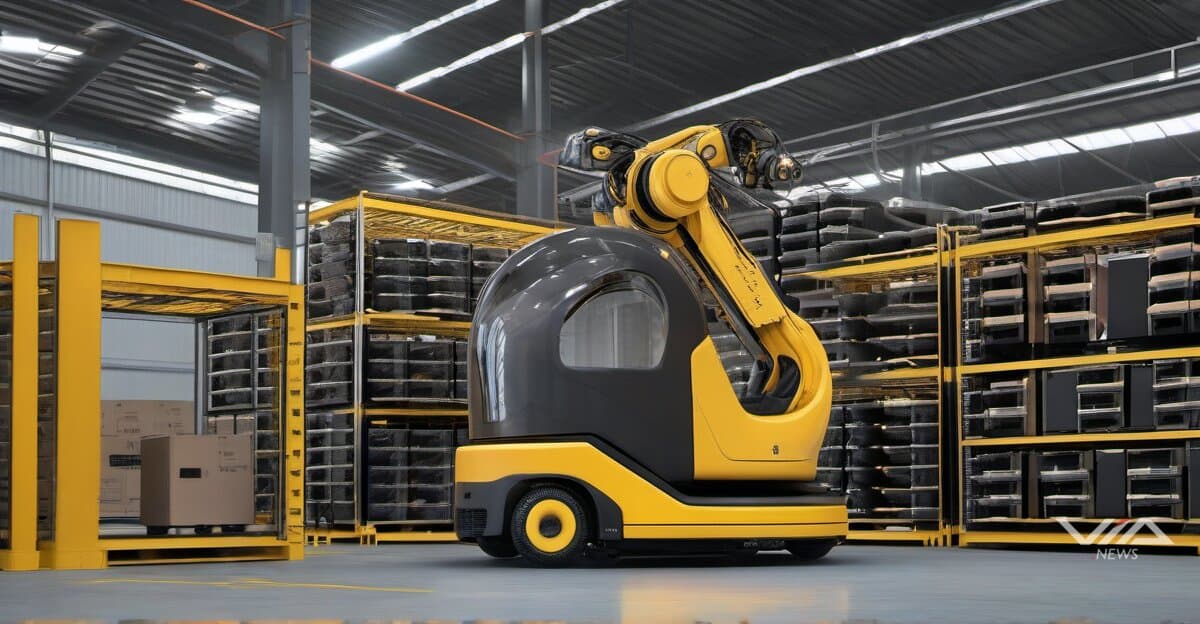
Nomagic's Shoebox Picker handles 98% of shoeboxes on the market, reflecting how Polish and international startups now outpace tech giants in warehouse automation deployment. CEO Kacper Nowicki said the system "bridges the gap between digital optimization and real-world execution" as investors shift from general-purpose humanoid robots to task-specific machines.
AI talent is leaving OpenAI, Meta, and Covariant for commercial robotics firms in Poland, the US, and China. Engineers who built foundation models now solve real-world constraints: variable warehouse lighting in Warsaw, pedestrian behavior in California robotaxi tests, irregular package shapes in Middle Eastern logistics hubs.
Nuro plans commercial robotaxi deployment by end-2026, conducting autonomous testing under its "safety and validation framework honed over years of commercial autonomous deployments." The US company's timeline signals regulatory approval confidence as European and Asian competitors advance parallel programs.
Saudi Arabia deploys Chinese robots for logistics, manufacturing, healthcare, and smart cities under Vision 2030. "They allow local companies and government entities to experiment, pilot, and scale automation solutions in months instead of years," said Mohammed Alsolami, highlighting deployment speed versus Western competitors.
Investment now targets sectors with clear ROI: warehouses replacing manual labor globally, autonomous fleets cutting driver costs in the US and China, manufacturing lines improving throughput in Europe and Asia. Naval and industrial partnerships test AI in controlled environments before wider rollout.
The 98% accuracy threshold makes automation economically viable at scale. Warehouse operators worldwide deploy robots for most tasks while routing edge cases to human workers, creating hybrid systems that maximize efficiency without requiring perfect performance. Early deployment failures taught the industry to target narrow use cases—shoebox picking, package sorting, specific vehicle routes—where current technology delivers consistent results.
The talent migration from research labs to commercial firms accelerated as AI matured from academic models to deployable systems. Polish startups, American autonomous vehicle companies, and Chinese manufacturers now compete for engineers who can translate research into products that work across lighting conditions, regulatory environments, and cultural contexts.