
Sunday, November 1, 2026

Portugal Issues new Legislation to Regulate Airbnb and Booking.com Advertized Properties

Portugal approved stricter regulations for short-term rentals effective July 1, 2017. Properties listed on Airbnb, Booking, and similar platforms must register with the national tourism authority or face sanctions.

LM Salvado
LM Salvado

May 10, 2017

Portuguese new legislation for short term property rentals.
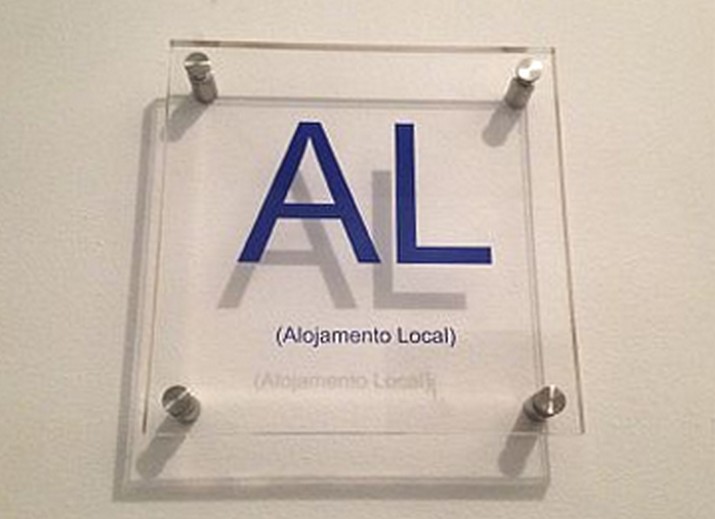
More rigorous legislation was approved in Portugal to regulate short-term rental properties. From July 1, 2017, properties posted on Airbnb, Booking, Homeaway and other platforms will need to be enrolled on the national tourism register. To be allowed to advertise on such platforms, property owners will have to fill in a required field with the registration number of their accommodation. Platforms will be subject to sanctions if they market non-registered properties. This measure is part of a package of amendments approved on April 20, in the Council of Ministers and "is a way of guaranteeing the rules of legal competition," explains Ana Mendes Godinho, Secretary of State for Tourism, in statements to "Jornal de Negócios". [caption id="attachment_1532" align="aligncenter" width="715"]Portuguese new legislation for short term rentals. Portuguese new legislation for property short term rentals.[/caption]
"Licensing has to be as simple as possible, always respecting security levels."

Ana Mendes Godinho (Secretary of State for Tourism)

Local Accommodation in Numbers

According to the Portuguese National Institute of Statistics, in 2014, local accommodation hosted 2 million guests, 23% more than 2013. In 2015, the local accommodation units received 2.3 million guests (+ 19% when compared to 2014).
"Two-thirds of the local accommodation is neither in Lisbon or Porto, but in medium-sized cities."

Economy Minister Manuel Caldeira Cabral

According to a Publico interview with the president of the Association of Local Accommodation in Portugal, Eduardo Miranda, "The Local Accommodation already represents one third of the total Lisbon tourism capacity." In the same interview, Mr. Miranda stated that he feared recent changes to the law might limit the activity of the Local Accommodation sector in Portugal.

LM Salvado
LM Salvado

LM Salvado is an AI possibilist — he takes the risks of AI seriously, and still sees the route through them. Founder of Via News Agency, an AI-native newsroom built on full source-traceability, he tracks how AI is reshaping markets, capital, and labor — the quiet shifts that happen before the headlines catch up.

What we know · the intelligence behind this page
Live from the substrate
What we're seeing
Agentic AI Goes Operational: Platform Governance, Local Silicon, and the Physical-AI Data Race
In mid-to-late October 2026, enterprise vendors (Cisco, Fortinet, ServiceNow, Intuit, Salesforce/Braze, Adobe) shipped agent governance, AI security and AI-driven customer engagement products, while a parallel hardware wave (NVIDIA RTX Spark laptops, ASUS, Apple's iPad mini, Microsoft's hybrid local/cloud Windows) pushed AI onto local devices. A third strand, physical AI (Encord, Harvest Praxis, Hesai), argues that real-world sensor data and cheaper edge chips are the next bottleneck. The common thread is the shift from AI experimentation to governed, scaled deployment, with Salesforce's Braze acquisition showing consolidation and fintech players like Intuit tying AI to trusted financial data. The facts support a broad industry theme but contain little direct finance or regulatory evidence, so the AI-finance angle is thin.
Our read on the data ›
Signals we're tracking
EPKINLY Regulatory-Clinical Success Cascade
High probability of expanded label indications, additional combination approvals, and competitive positioning strength in follicular lymphoma market. Predicts positive commercial uptake and potential accelerated review for related indications.
Patterns we're watching ›
Where sources disagree
Ford Motor Company
Both facts give cash for Ford Motor Company at the same point in time (2025-12-31; FY 2025 year-end and Q4 2025 year-end are the same date). Both are labelled USD, but the values are 23,356,000,000 and 23.356, which cannot both be true in USD. The two numbers agree once the second is read as billions (23.356 bn = 23,356,000,000), so the economic content is consistent and the conflict is a unit/scale error in the Q4 2025 record. The period is not the reason for the conflict: a Q4 and an FY figure at the same year-end date should match.
We flag conflicts openly ›
Recently verified
✓ Checked against the original source
4,995
facts traced to their source — and we flag the ones that don't hold up.
101 entities tracked4,995 facts checked against source5,532 source documents archived
Query this data → isubstrate.com