
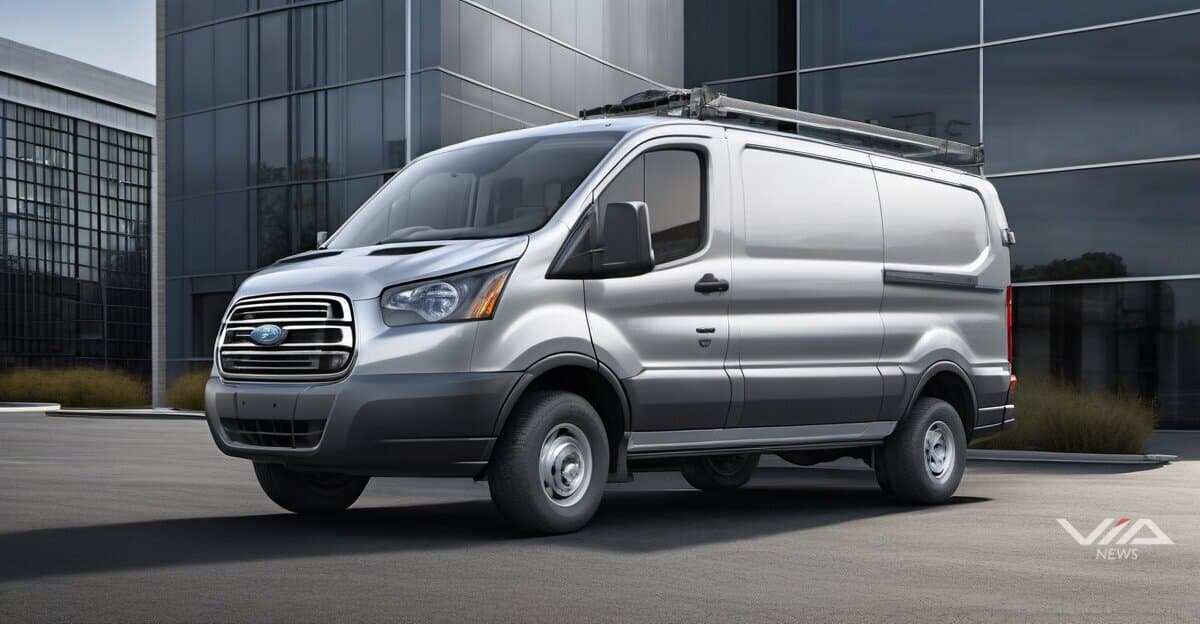
Ford Motor Company has confirmed it is scrapping plans to manufacture an all-electric commercial van at its Ohio Assembly Plant, replacing the project with a new line of gas and hybrid vans. The decision, framed by Ford as a response to fleet buyer behaviour, is in fact a microcosm of a far larger global story: the commercial electric vehicle transition is faltering, and the world's major automakers are quietly recalibrating.
A Global Retreat, Not Just an American One
Ford's Ohio pivot does not stand alone. Across the Atlantic, Volkswagen has scaled back electrification timelines and floated the prospect of closing German plants for the first time in the company's history. Stellantis, the multinational group behind Fiat, Peugeot, Citroën and Ram, has similarly slowed EV investment amid falling margins. In the United Kingdom, the Society of Motor Manufacturers and Traders has repeatedly warned that mandatory zero-emission vehicle quotas are outpacing actual consumer and fleet demand. Even in Norway — the world's most advanced EV market, where electric vehicles account for more than 90 percent of new passenger car sales — the commercial van segment lags significantly behind, with fleet operators citing payload penalties and limited charging options at depots and job sites.
The pattern is consistent: while passenger EV adoption, particularly in China and parts of Europe, has advanced rapidly, the commercial vehicle segment operates under a different set of economic constraints that battery technology and charging infrastructure have not yet resolved at scale.
Why Fleet Operators Are Hesitating
The barriers fleet buyers cite are practical and financial rather than ideological. Logistics companies, construction firms, tradespeople and small business owners — the core buyers of commercial vans — make purchasing decisions based on total cost of ownership over a vehicle's working life, not sticker price or environmental credentials alone. On that measure, electric commercial vans remain difficult to justify in most markets.
Charging infrastructure at commercial depots requires significant upfront capital investment. In developing markets across Southeast Asia, Latin America and sub-Saharan Africa, reliable grid access itself remains a constraint. Payload limitations matter acutely for trades-based operators who cannot afford to sacrifice carrying capacity. And range anxiety — less relevant for predictable urban delivery routes, but highly relevant for mixed-use commercial operators — remains a genuine operational concern beyond well-served urban corridors.
China, which leads the world in EV adoption broadly, offers the most instructive counterpoint. Chinese commercial EV uptake has been driven largely by state subsidies, municipal fleet mandates in major cities, and the rapid build-out of domestic charging infrastructure — conditions that do not currently exist in comparable form in the United States or most of Europe. BYD, SAIC and other Chinese manufacturers have captured meaningful commercial EV market share precisely because government policy removed many of the financial barriers that continue to constrain adoption elsewhere.
The Hybrid Middle Ground
Ford's decision to offer a hybrid variant alongside a conventional internal combustion option is commercially astute and globally significant. Hybrid commercial vehicles are emerging as a pragmatic bridge technology in markets where the infrastructure for full electrification remains immature. They deliver measurable fuel savings — reducing operating costs and emissions — without requiring depot charging investment or range management. For governments committed to interim emissions reductions but unable to mandate full electrification of commercial fleets on current timelines, hybrids offer a credible transitional pathway.
Japan's Toyota, long a proponent of hybrid technology over rapid full electrification, has found validation in this moment. Its hybrid commercial offerings have performed robustly in markets where rivals pushing pure-electric alternatives have struggled to convert fleet buyers. The Ford pivot, in some respects, represents an American acknowledgment of what Toyota has argued for years: that the path to decarbonisation in commercial transport is more gradual and technology-diverse than a binary ICE-to-EV narrative suggests.
Financial Discipline After Costly Optimism
The strategic retreat also reflects a financial reckoning. Ford's Model e electric division has accumulated billions of dollars in operating losses as the company built EV capacity ahead of demand that did not materialise at projected volumes. That experience is not unique: General Motors has written down EV investments, Rivian has struggled with production economics, and European EV-focused startups have faced a brutal funding environment. The era of patient capital absorbing EV losses in anticipation of future scale is narrowing as interest rates remain elevated and investor scrutiny of EV unit economics intensifies globally.
For the Ohio Assembly Plant's workforce, the pivot preserves jobs that a prolonged EV ramp-up might have put at risk — a consideration with political salience in a U.S. election environment acutely sensitive to manufacturing employment. Similar calculus is playing out in German automotive communities, British vehicle assembly towns, and South Korean industrial cities where EV transition timelines directly threaten established employment in conventional powertrain supply chains.
What This Means for the Global EV Timeline
Ford's Ohio decision will not derail the long-term trajectory toward electrification in commercial transport. The regulatory direction — stricter emissions standards in the European Union, California and an expanding list of jurisdictions — remains firmly pointed toward zero-emission vehicles. But it does sharpen a distinction that advocates of rapid electrification have been reluctant to make explicit: the commercial vehicle transition will proceed on a different timeline, and through a different mix of technologies, than the passenger car transition.
Policymakers drafting commercial fleet electrification mandates, infrastructure investment programmes and green procurement rules would do well to absorb the signal Ford is sending from Ohio. The market, for now, is speaking clearly — and it is asking for more time, more infrastructure, and more financial viability before committing to an all-electric commercial future.