
In boardrooms from Seattle to Singapore, the question hanging over the world's largest coffee chain is no longer whether Starbucks needs to change — it is whether it can change fast enough, and coherently enough, to matter.
The company has now answered with unusual directness. New leadership has set formal fiscal 2028 financial targets and launched four concurrent operational programmes that together amount to a full corporate reset. This is not a messaging exercise. Companies rarely anchor multi-year guidance unless they are genuinely prepared to absorb near-term earnings compression in exchange for a credible recovery narrative — and Starbucks is signalling exactly that, with margin pressure expected through at least fiscal 2026.
A Global Brand Confronting a Global Problem
To understand why this matters beyond Wall Street, consider the scale: Starbucks operates in more than 80 countries, and its challenges are not uniquely American. In China — its second-largest market and the one most watched by global investors — the company faces intensifying competition from homegrown rivals such as Luckin Coffee, which has undercut Starbucks on price while matching it on mobile-order convenience. In the United Kingdom and across Western Europe, premium independent coffee culture has raised consumer expectations for speed and quality. In Southeast Asia and the Middle East, where the brand carries significant aspirational weight, any deterioration in the in-store experience risks eroding the premium positioning that justifies its pricing.
The throughput problem at the heart of this reset — too many orders, too slowly fulfilled, too inconsistently executed — is a global problem. It is simply most visible in markets where Starbucks has the deepest penetration.
Four Programmes, One Strategic Architecture
The turnaround rests on four named initiatives. NextGen POS is a ground-up overhaul of the point-of-sale technology stack, targeting the operational bottlenecks that have frustrated both baristas and mobile-order customers during peak hours. In an era when rivals from Dutch Bros in the United States to Tim Hortons in Canada and Café Amazon in Thailand have invested aggressively in digital ordering infrastructure, Starbucks' technology lag has become a competitive liability.
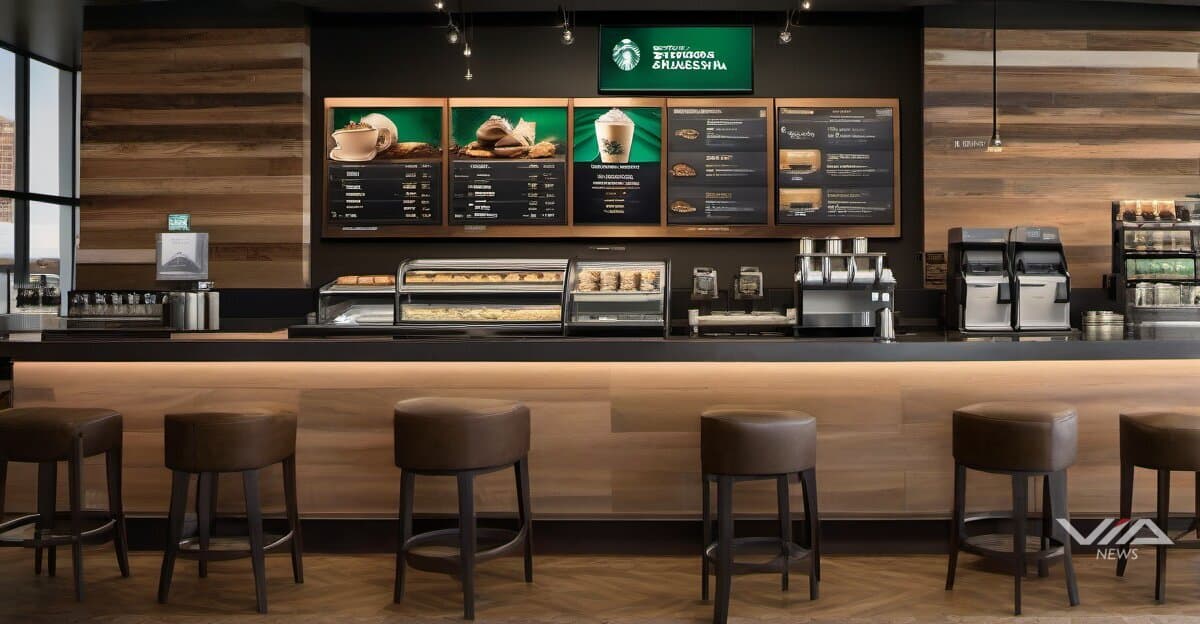
Uplift Remodel addresses the physical estate — a refresh of café layouts designed to accommodate the structural shift toward pick-up and drive-through transactions that now dominate order mix in most developed markets. This mirrors a broader global trend: from McDonald's to Pret a Manger, virtually every major quick-service and fast-casual brand has been reconfiguring its physical footprint around off-premise and on-the-go consumption patterns that accelerated sharply during the pandemic and have not reversed.
Mastrena III — the latest generation of Starbucks' proprietary espresso machine platform — is a capital-intensive equipment rollout across thousands of locations worldwide. The promise is faster extraction times, reduced barista training burden, and more consistent beverage quality. In markets where local espresso culture is deeply embedded, such as Italy, Australia, and Brazil, consistency of execution is not merely an operational metric — it is the threshold condition for brand credibility.
Finally, Starting Five targets labour: restructuring staffing models to reduce turnover and improve in-store execution. Barista attrition has been a persistent drag on service scores globally, and it sits within a wider challenge facing hospitality employers worldwide — a post-pandemic tightening of service-sector labour markets that has forced every major chain to reconsider compensation, scheduling, and career pathway structures.
The Investment Timeline and What It Means for Investors
The sequencing of these programmes matters enormously. Capital expenditure across remodels, equipment, and technology will weigh on free cash flow in fiscal 2025 and 2026. Margin recovery is not expected to materialise in earnest until the operational benefits are fully realised — a timeline management appears to be pinning to fiscal 2027, with full financial targets achieved by fiscal 2028.
With a market confidence assessment of approximately 68%, the signal is constructive but carries real execution risk. Running four major operational programmes concurrently across a global franchise system — where local operators, regulatory environments, and labour laws vary enormously — introduces implementation complexity that centralised planning cannot fully anticipate. Any slippage in the NextGen POS rollout or the Mastrena III deployment could push the earnings inflection further out, testing investor patience on multiple continents.
The Competitive Context: A Crowded Global Arena
Starbucks is attempting this reset in a global coffee market that the International Coffee Organization estimates is growing at roughly 3–4% annually, driven primarily by emerging markets in Asia and Africa where coffee consumption per capita remains well below Western levels. That structural growth backdrop is a genuine tailwind — but it also explains why competitors are moving so aggressively. Luckin Coffee now operates more locations in China than Starbucks does globally. South Korea's café density is among the highest in the world, with local chains such as Ediya and Mega MGC Coffee competing fiercely on value. In Brazil — the world's largest coffee-producing nation — premium café culture is expanding rapidly into the domestic market, creating new local players with deep cultural authenticity.
Against this backdrop, Starbucks' global reset is not merely about recovering margins. It is about re-establishing operational credibility as the foundation for competing in the next decade of global coffee market growth. The 2028 targets are a promise. The next two years will determine whether the infrastructure to keep it is actually being built.