SANTO DOMINGO, Dominican Republic (ViaNews) – The ocean garbage tragedy has hit the Dominican Republic shores. Plastic in our oceans may be a global phenomenon, but the Dominican Republic is now having to solve the problem of handling with such huge quantities of garbage. Have you considered that every toothbrush you have ever used is still somewhere on the planet?
In the Dominican Republic, the effects of the plastic pollution have been hidden for some time now, even though the community service organizations have been coordinating clean-up campaigns for a long time now. In the past, the cleaning was limited to the garbage left by people on their holidays, leaving behind plastic bottles and other stuff, but today, things have changed.
The tropical storm Beryl flooded the rivers around Santo Domingo and when the water receded, it brought with it lots of garbage, mainly plastic which has previously been deposited on the river shores over many years. Huge quantities of plastic containers, styrofoam, and other debris can be found in what used to be pristine beaches and sand.
[caption id="attachment_4786" align="aligncenter" width="900"]
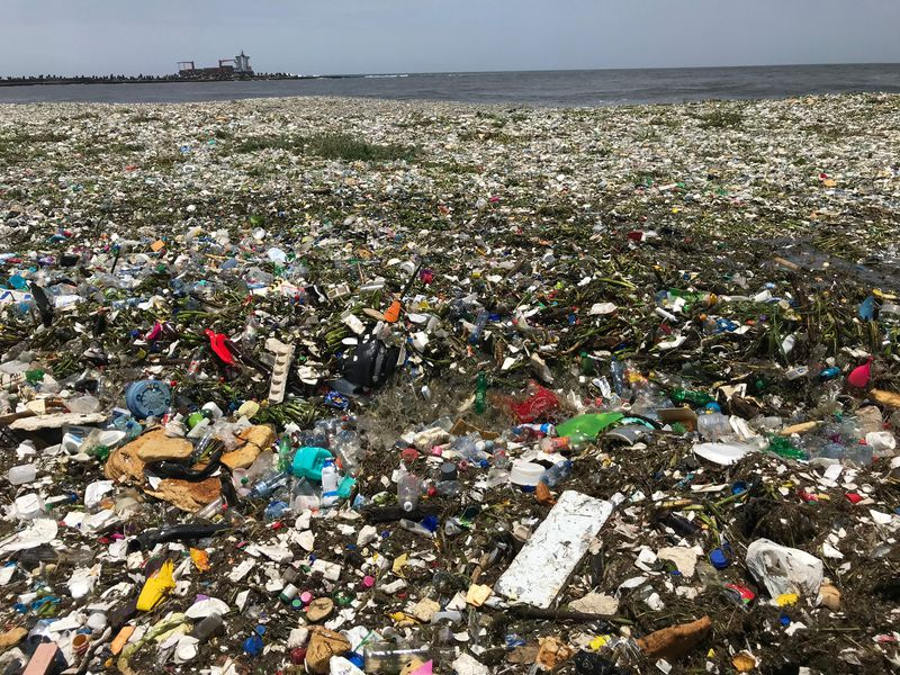
Plastic pollution on the shores of Montesinos beach, Santo Domingo, in the Dominican Republic.
Photo by: Parley for the Oceans.[/caption]
On the Montesinos beach alone, in the Dominican capital of Santo Domingo, workers collected sixty tons of garbage since last week.
This Caribbean nation is known for sapphire-like seas and ivory beaches but is now having to cope with waves of plastic pollution, a very vivid reminder of how many tons of plastic should now be lying around in the world’s oceans.
Such big piles ocean garbage, most notably the Great Pacific Garbage Patch, are generally far from human eyes. But now, we’re witnessing it with our own eyes on some of the Caribbean dreamy beaches. The Dominican Republic has a long history of “garbage dumps” and problems with waste handling, but nothing as extreme as this.
What once might be a beautiful postcard of people enjoying and relaxing on Montesinos Beach, in the Dominican capital, is now replaced by hundreds of city workers and volunteers removing plastic from both the sea and sand.
Santo Domingo is Unable to Cope with the Huge amount of Garbage
The Dominican media such as Diario Libre reported that its capital city, Santo Domingo, is now debating what to do with the huge quantity of garbage the city must now deal with. The Santo Domingo urban planning proposes other options in order to replace Duquesa, the local garbage landfill.
The Dominican newspaper Diario3.com reports that a large accumulation of garbage in the streets keeps the citizens desperate, wondering what’s happening and blaming the mayors for not being able to solve the situation. In the capital center, specifically in the vicinity of Duarte Avenue, there are small garbage dumps on the sidewalks that could produce outbreaks of diseases such as dengue, leptospirosis, and others. The main concern is that food waste may attract rats and mosquitoes, Diario3 added. Citizens also complain that schedules for the garbage pickups have not been respected.
The Dominican newspaper, Listin Diario reported that the garbage produced by the Dominican Republic increased by 21%. The Ministry of the Environment asks for the elimination of plastic. Business leaders and government officials propose that the country implements clear laws for the handling of waste and specify those that should be recycled and reused, as most developed countries do already.


 Plastic pollution on the shores of Montesinos beach, Santo Domingo, in the Dominican Republic.