
Theresa May Promises Tuition fee Freeze
Peter Bird
October 2, 2017
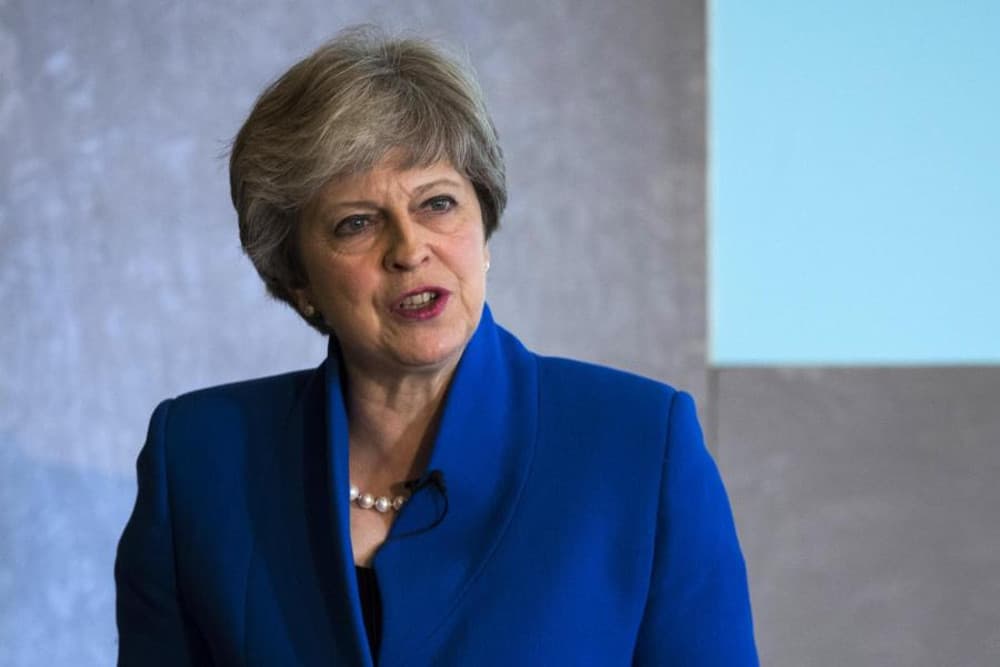
London, UK (VIAnews) - Theresa May has announced a freeze on tuition fees for students in England.
She has also stated that the threshold at which students will need to start paying back loans once they begin work will rise from the current figure of £21000 to £25000.
However, whilst this may help graduates who go on to earn at the lowest end of salary spectrum, most graduates would hope to pass the £25000 point quickly. They will still be faced with paying back 9% of their salary for twenty-five years to allow the Government to recoup the loans they award.
These are the costs of tuition and also living expenses. Overall, therefore, the measures will provide no overall benefit to most students.
Although details are not yet clear, it appears as though May’s changes will only apply to those graduates who took out student loans post 2012, when the cost of tuition increased. If this is the case, then graduates on the same earnings could be faced with differing levels of loan repayment.
The Government has also promised to look at many of the other issues that are causing students and their parents’ concerns over the full range of university costs. Included in this are an assurance to consider the feasibility of re-introducing maintenance grants, and varying the levels of fees depending on the course being taken.
At present, a low-cost degree in, say, English costs the same as an expensive course in engineering or science.
Students, though, immediately expressed concerns that this is little more than an attempt to woo younger voters. One tweeted ‘Who thought that freezing tuition fees at the highest they’ve ever been would win over the youth vote?’
Even members of May’s own party have expressed some doubts over the veracity of the scheme. Michael Heseltine, a former Deputy Prime Minister, expressed the view that the Tories will always lose out to Labour when it comes to the youth vote.
Jeremy Corbyn, the Labour Party leader has already pledged to scrap tuition fees if his party is elected to Government.
The shadow education secretary, Angela Raynor, said that the announcement was a ‘desperate attempt’ by the Tories to put the issue aside.
Labour MP Luke Pollard put it succinctly in another tweet meant for current and potential students. ‘So, your choice is annual tuition fees of £9250 with the Conservatives or annual tuition fees of £0 with Labour.’
Shakira Martin, head of the National Union of Students has cautiously welcomed the news. Although the NUS has called for the complete scrapping of fees, she thinks that raising the point at which repayments start could be a sign that the Government is beginning to listen to students.
‘An investment in students is an investment in our future,’ she said.
But she still feels that the move could exclude families from the poorest backgrounds from accessing higher education. She said that Government must act to ensure that this does not happen.
The plan had been to increase fees further next summer by £250. This is a percentage increase almost three times that offered as a pay rise for most public-sector workers.
Martin Lewis, who runs the personal finance website Moneysavingexpert.com, has argued long and hard for a review of tuition fees. He points out that for most students, the prospect of ever paying off their loans is a remote one. Any outstanding debt is written off after twenty-five years, and only a small percentage of graduates ever earn enough to clear all the money they owe.
Lewis makes the point that it is best for students to take loans, rather than for their parents to pay out up front since it is likely that some part of their borrowing will eventually be written off. He welcomes the Government’s actions, arguing that the changes proposed by Theresa May mean that this will apply to even more young people.
There appears to be a touch of a knee-jerk reaction to the announcement. The last parliament introduced the teaching excellence framework. This was a scheme designed to reward the best universities by allowing them to charge higher fees. However, it seems as though this idea will need to be scrapped in order to allow these latest plans.
Both the Conservatives and their leaders are facing turbulent times, with internal squabbling, perceived U-turns on Brexit and a parliamentary minority all causing problems. They will hope that the decision to freeze tuition fees will give them some breathing space from this area of criticism at least.
It may be wishful thinking.