
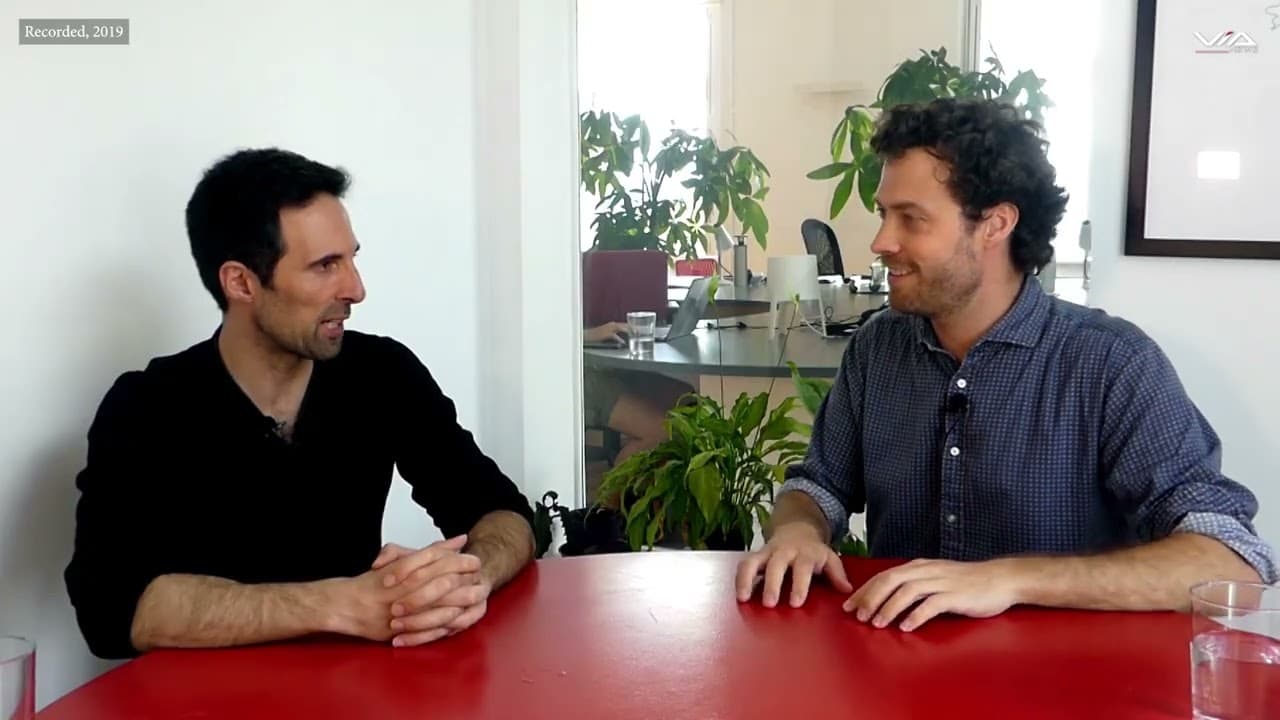
Tom Davis, founder of Cowork Central, says the coworking industry is being pulled in two directions at once: on-demand booking through apps, which makes member communities more fluid, and a growing corporate market that is drawing larger operators into Lisbon. He told Via News that his own business is trying to serve both while persuading people to become long-term members.
Apps make the community more fluid
Davis described how the way people choose a workspace has changed. "people lie in bed in the morning and they decide oh where should I work today and they look at their phone and they go okay this place looks interesting I'll go here and they log in with their app and they appear you know which is great and I think that presents one of the challenges for us in the future"
The difficulty, he said, is that members are attached to the city but less so to any one space. Cowork Central has accommodated the trend by taking bookings through an app called Croissant. "Croissant is very popular because literally you can roll out of bed in the morning, you can choose the space, you can check in and here you are." On the day of the interview, he said, about five people from the app were working in the space where he was speaking, and two or three in the company's other space.
At the same time, he said, the company is working on a second task: adapting its model to make longer stays more attractive and to sell the benefits of being a resident member of what he called the Cowork Central family. The oldest space has desks for 50 people, he said, roughly 40 of them held by fixed members. He estimated that 200 to 250 people are active members in a given month, with a similar split in the second space.
Remote work and the Portuguese job market
Davis, who moved to Lisbon 12 years ago after working as a web designer and developer in London, said remote work has moved from the margins to the mainstream. "when I came 12 years ago I was an exception you know there were a handful of people who were working remotely and if they were working remotely they didn't tell their boss they were working remotely"
Today, he said, whole companies operate remotely, and some of them pay for employees to cool down in shared offices. "they even give their employees co-working budget as part of their paid packet because they realize the value of working together in an office even when you're not working alongside your colleagues"
He said Portuguese attitudes to freelancing are slower to shift. "I still get the impression even now that the idea of being a freelancer in Portugal is still considered not a proper job" He argued that freelance platforms are changing that, because they let Portuguese professionals look for clients abroad. "Now they don't need to leave the country to find work. They can stay in the country and they can find work outside in their areas." He added that the mix of members has widened beyond the web developers and translators he first met, to include consultants, coaches, writers, lawyers and independent e-commerce operators.
Corporate demand and team retreats
Davis said the corporate side of coworking is growing. Companies that once ran their own offices can now outsource space and keep their flexibility, starting with four desks and expanding as a team grows. Cowork Central has always kept some rooms for teams, he said, and they have been popular. He also pointed to rising requests from remote companies that send whole teams to Lisbon for a week or a month to meet in person.
Even so, he cautioned that coworking is not the mainstream of the wider market. In his view, the term is often a more appealing label for what used to be called service offices, with community, events and social life attached.
Cowork Central itself grew out of a shared office among freelance friends from several countries, he said. The company took its name from the building it occupies, which he said was once the Grand Hotel Central. Davis said the move into a business meant the space had to pay for itself, and that his design background and his enjoyment of other people made it a natural step.
Advice for new founders
Asked what he would tell young entrepreneurs, Davis said the lowest-risk move is to start. He said the cost of entry has fallen sharply, and argued that passion is what carries founders through difficult periods.
I think that's very important to be interested in what you're doing and love what you're doing because that passion is vital. It will keep you going in the tough times.
Davis said the barrier to starting any kind of business is now small enough that the answer to hesitation should simply be to try it, because there is little to lose.
Watch the full interview
Interview by L. Miguel Salvado for Via News.