

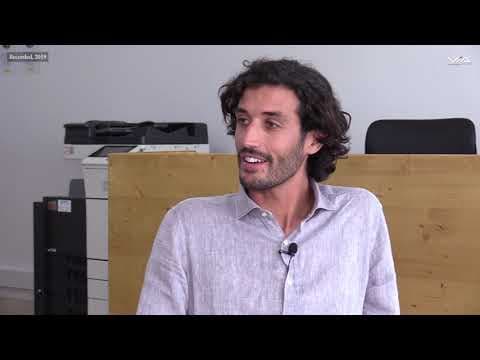
António Mesquita, Co-Founder of Revés Cowork Space in Lisbon, believes the city's coworking market is getting more crowded but still has room for new operators. He told Via News that competition has grown since he began the project, yet the underlying demand is moving in the same direction as his business.
"I think that the competition is increasing but I still think there's space for all of us," he said. He pointed to more companies putting employees to work remotely, more people becoming freelancers and a steady flow of companies and freelancers settling in Lisbon.
Why Lisbon draws remote work
Mesquita said many of the companies arriving in the city serve markets far away, including Asia and the Americas. In his view the city suits that kind of business. "Lisbon is a good place they can work for both markets and have a quality of life for the employees which is really important," he said.
He listed the climate, with about 200 days of sun, a cost of living he described as still not very expensive, and easy access to the south and the north of Portugal. He acknowledged that housing is getting expensive, but said the rest of daily costs remain at good standard prices. In his words, anyone who can make some money can have a good life there.
Community over office space
Asked where the industry is heading, Mesquita described the question as a tough one. He said he had recently discussed it with other coworking managers, and that the concern was a drift towards the business centre model, where companies occupy whole floors of a building. "If you have a space where a group of companies are working in their own private spaces you kind of lose the fundamentals of co-working which are the community the exchange of experiences," he said.
He added that hostels, restaurants, cafes and bars are now offering coworking too, and said he sees these as equally distant from the concept. For him the defining feature is shared community. "It's a place where you can work independently but you don't work alone," he said. He expects the next couple of years to show where the market settles, but said he is confident: "I definitely think that the trend it's on our side so we are we are going on the right path."
Building the business
Mesquita said the space opened in February, about a year after he found the premises, following seven to eight months of construction. He said he had always wanted to run his own business rather than work for a big company, and had spent a year at a large consultancy group and made two attempts to open a hostel before this project came together. He had been looking at the coworking concept for two or three years, he said.
The space has flexible and fixed desks, a quieter premium area with wider tables and more natural light, and private offices downstairs. Three of those are let, he said, to a Portuguese company, an American company and a third that is about to move in. In the open area he said he sees mostly freelancers and remote workers, including people working for Spanish and French companies, from industries such as art, tourism, coaching, e-commerce and architecture.
His biggest challenge since opening has been reaching customers. He said he ran no marketing in the first months by choice. "We wanted to grow organically so it's my first time opening a co-work and I also wanted to meet the persons personally get their feedback," he said. Clients so far have come from passers-by, word of mouth among friends and social media.
That is now changing. Mesquita said a neighbourhood campaign is being prepared, because many people living nearby are looking for a coworking space without knowing his is there. "We found out that a lot of people that come to us they live in the surrounding areas but they just don't know that we are here," he said. A digital push is planned for September, after the summer slowdown when many people go on holiday.
Advice for entrepreneurs
Describing himself as still a young entrepreneur who is learning and making mistakes, Mesquita said perseverance matters most, along with listening to peers, friends and more experienced people.
"A lot of things will go wrong and a lot of things go wrong but it depends it's only up to you if if you want to correct them and make them go right."
The interview was published by Via News on 3 December 2023.
Watch the full interview
Interview by L. Miguel Salvado for Via News.