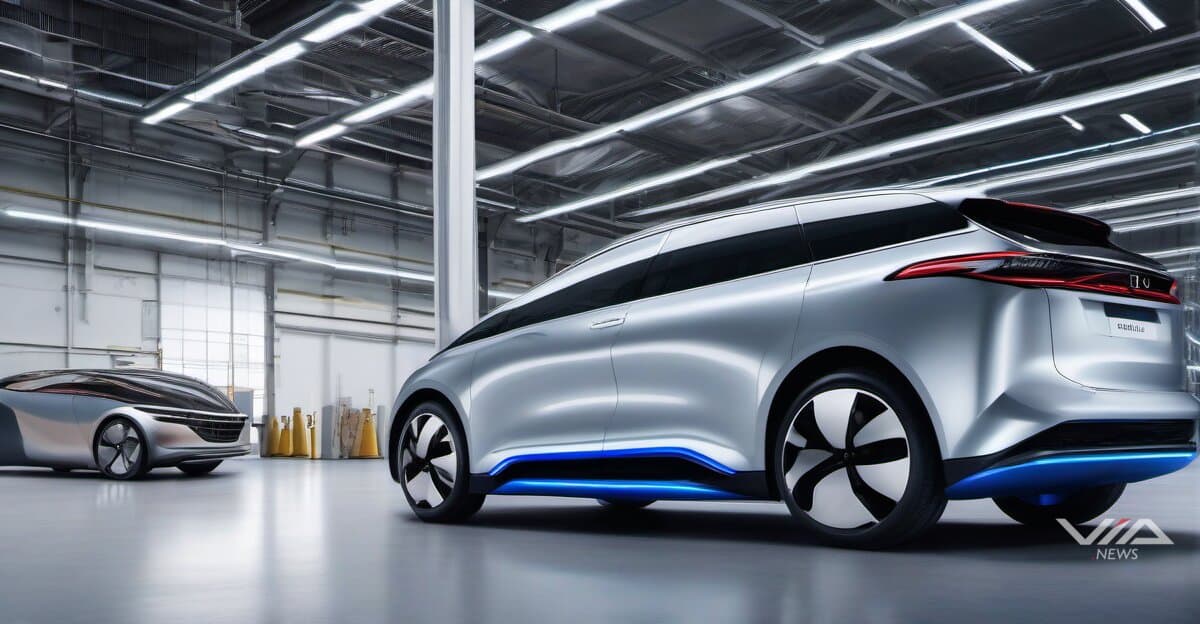
A new manufacturing partnership will bring Portugal's BEN micro-vehicle to industrial-scale production at Micro-AMFI's Turin facility, where it will share production lines with the Microlino.1 The collaboration between AMFI and Portuguese engineering firm CEiiA marks a significant step in Europe's efforts to build competitive domestic capacity for small electric vehicles.
"By integrating BEN into their production site alongside Microlino, they are reaching the critical mass necessary to build a truly competitive and scalable European industrial ecosystem," said Michelangelo Liguori, noting that Turin has "the talent, infrastructure and now the partnerships to lead this transformation."1
The multi-brand production model addresses a core challenge facing European micro-vehicle manufacturers: achieving economies of scale that Asian competitors already leverage through high-volume production. While China dominates global EV manufacturing with established supply chains and cost advantages, European micro-vehicle makers have struggled to reach viable production volumes independently.
Micro-vehicles occupy a specialized niche focused on urban mobility, typically featuring compact designs for city driving. The segment remains small compared to standard passenger cars, but European policymakers increasingly view urban EVs as critical for reducing emissions in dense city centers where larger vehicles face growing restrictions.
AMFI was established specifically to become a strategic industrial hub for Europe's electric micro-vehicle sector.1 The shared facility approach could provide a blueprint for other emerging EV categories seeking European manufacturing footholds without the capital intensity of dedicated single-brand factories.
The Turin-Lisbon partnership comes as European manufacturers face mounting pressure to develop domestic EV supply chains less dependent on Asian imports and components. While micro-vehicles represent a fraction of overall automotive production, the manufacturing processes and supplier networks developed for these vehicles may inform broader European electrification strategies across conventional vehicle segments.