Saturday, October 10, 2026

Transportation

5 articles

Turin Partners with Portuguese Firm to Scale Electric Micro-Vehicle Production

Turin Partners with Portuguese Firm to Scale Electric Micro-Vehicle Production

Micro-AMFI is partnering with Portuguese engineering firm CEiiA to manufacture the BEN micro-vehicle at its Turin facility alongside the Microlino. The collaboration aims to build critical mass for Europe's nascent electric micro-vehicle sector as the continent races to establish domestic EV supply chains independent of Asian dominance.

LM Salvado•

Uber Abandons In-House Autonomous Tech, Pivots to Global Partnership Model

Uber Abandons In-House Autonomous Tech, Pivots to Global Partnership Model

Uber sold its autonomous vehicle division in December 2020 and now relies on partnerships with Wayve, Rivian, and Chinese AV firms. The shift mirrors a global industry divide between vertically integrated developers like Tesla and platform operators aggregating third-party technology. Equity investments in partners give Uber technology access without R&D costs but create dependency on external timelines.

LM Salvado•
Level 2++ Autonomous Driving Goes Standard in 2025-2026 Vehicle Production Worldwide

Level 2++ Autonomous Driving Goes Standard in 2025-2026 Vehicle Production Worldwide

Vehicle manufacturers across global markets are installing Level 2++ autonomous driving systems as standard equipment in 2025-2026 production lines. The systems handle steering, acceleration, and braking with driver supervision, bridging traditional Level 2 assistance and full Level 3 autonomy. Simultaneous deployment across multiple vehicle lines marks the largest autonomous system rollout to date.

LM Salvado•
Autonomous Vehicle Makers Abandon Black-Box AI for Verifiable Systems as Global Road Deaths Hit 2 Million Annually

Autonomous Vehicle Makers Abandon Black-Box AI for Verifiable Systems as Global Road Deaths Hit 2 Million Annually

Companies developing self-driving vehicles are rejecting the opaque neural networks used in current driver assistance systems, shifting to verifiable vision models designed for full autonomy. The pivot comes as road accidents kill 2 million people worldwide each year, with existing automation failing to reduce fatalities. Waabi and XPeng lead deployments of production systems built for regulatory approval across international markets.

LM Salvado•
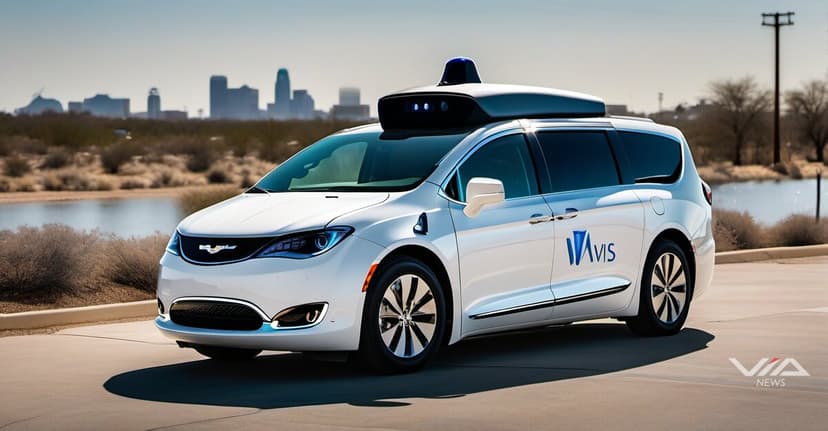
Waymo Outsources Dallas Robotaxi Fleet to Avis as Global AV Firms Shift from Vertical Integration

Waymo Outsources Dallas Robotaxi Fleet to Avis as Global AV Firms Shift from Vertical Integration

Waymo contracted Avis Budget Group to manage its Dallas autonomous vehicle fleet, marking a strategic shift from in-house operations to specialized partnerships. The model mirrors automotive industry patterns where manufacturers outsource non-core functions, potentially setting standards as Chinese, European, and US robotaxi operators scale globally. Texas's permissive AV regulations contrast sharply with stricter frameworks in EU markets and parts of Asia.

ViaNews Editorial Team•
What we know · the intelligence behind this page
Live from the substrate
What we're seeing
Agentic Enterprise Software Consolidates: Big Platforms Push Autonomy While Startups Get Absorbed
Enterprise software is shifting toward autonomous, AI-agent-driven products. SAP (Autonomous Enterprise, Joule), Meta (a new Enterprise Platform led by ex-MongoDB CEO Chirantan Desai) and UiPath (raised guidance) are pushing from the top. Meanwhile AI-security and governance startups are being acquired (Fortinet–Virtue AI, Harvey–Guardrails AI, Tiny–Oso Cloud) and seed-stage agent companies keep raising capital (Dextr, Latitude, Groq). Investors such as Norwest's Sean Jacobsohn see finance and ERP back-office software as the easier area to disrupt. Trust and enforced governance are treated as preconditions for regulated sectors like finance, and AI is judged unreliable for calculations.
Our read on the data ›
Signals we're tracking
EPKINLY Regulatory-Clinical Success Cascade
High probability of expanded label indications, additional combination approvals, and competitive positioning strength in follicular lymphoma market. Predicts positive commercial uptake and potential accelerated review for related indications.
Patterns we're watching ›
Where sources disagree
ING Group
Both facts record the same metric (shares_outstanding) for ING Group at the identical observation date (2025-12-31). FACT A states 2,902,437,688 shares; FACT B states 2,902 million shares (2,902,000,000). The difference is 437,688 shares (~0.015%). This is a genuine value conflict, though the discrepancy appears to result from FACT B rounding to the nearest million while FACT A provides the precise count.
We flag conflicts openly ›
Recently verified
✓ Checked against the original source
4,986
facts traced to their source — and we flag the ones that don't hold up.
101 entities tracked4,986 facts checked against source5,366 source documents archived
Query this data → isubstrate.com