

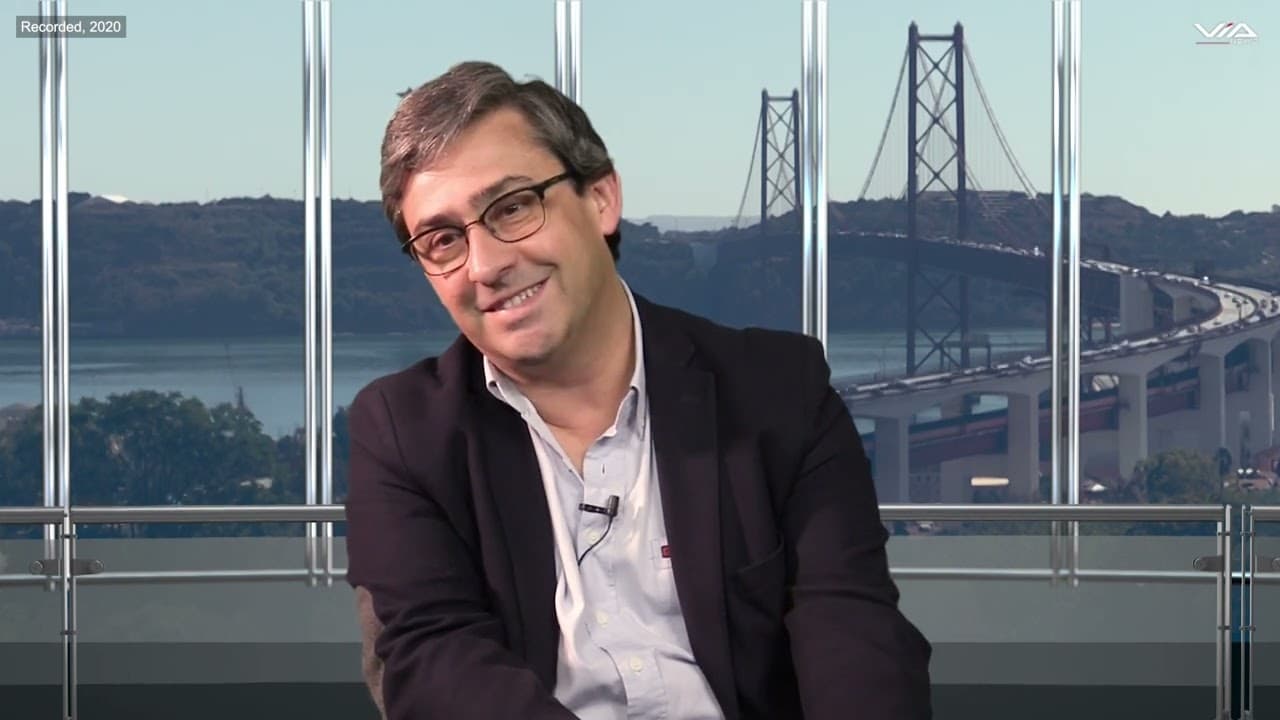
This interview was recorded about 2020.
Investors find deal flow without the speculation
Miguel Fontes, Executive Director of Startup Lisboa, says Lisbon's startup scene is attracting international capital because it offers something more mature ecosystems no longer do. In an interview recorded about 2020, he said investors arrive looking for opportunities at a different point in the cycle.
"International investors when they come, they come because precisely they can find here a very good deal flow for what they are looking for in the different kind of conditions what they have in more mature ecosystem like in Berlin, London or in Silicon Valley."
Asked whether Portuguese companies are heading into an investment bubble, Fontes said the country is not there yet. Because the local ecosystem started later, he argued, it has avoided the speculation seen elsewhere. "The valuation years, they are much more related with the real value of the companies that allow us to be more confident about the future." He added that the situation is less critical than in Silicon Valley, where he described valuations as "completely crazy".
He accepted that a global downturn would reach Portugal as well. The only thing a startup can do, he said, is to be aware of the risk, recognise that the current moment is not permanent, and take advantage of the money and the investors available while they are there.
That's why I would say people are not, no more focus on unicorns if you want, but more in sustainable companies.
Growth, but with a balance sheet in mind
Fontes described a shift in the startup world away from growth at any cost. For years, he said, the prevailing idea was to grow without concern for financial questions. He does not reject scale, but wants founders and investors to hold both ideas together. "It's what you want about venture capital. You want to find project that can scale and can become a huge, huge project internationally, but it's important since the day one to take care of the sustainability of the business."
Asked whether a recession is coming, he declined to forecast. He said it is almost impossible nowadays to predict the future, and that plans for five or ten years are no longer realistic. Companies still need to think strategically, he said, but without large fixed plans, because events can change the game. "What is important is to be flexible, agile and with the capacity to read this kind of signs." He said Startup Lisboa itself works this way, adjusting its own plans when new ideas and requests arrive from outside.
Talent, community and the ecosystem
On why more companies are moving to Lisbon, Fontes put talent first. "As you know, talent is nowadays the most valuable asset for any kind of company." He pointed to the city's universities in engineering, management and design, and said Lisbon can also draw people from abroad because of its quality of life. A company weighing locations, he said, will find it easier to invite staff from the United States, Germany or Sweden to live there.
Startup Lisboa marks its eighth anniversary, and Fontes, who joined as Executive Director four years ago, said the organisation began by supporting founders alone and now sees a wider role in promoting the ecosystem. He gave the portfolio figure with a caveat about how hard it is to track. "In total, we have a portfolio of startups that they have been invested in more than 120 million euros." He cited Indie Campers, one of the first startups to begin at Startup Lisboa, as an example. He said it now operates in almost the majority of countries in Europe and employs more than 150 people.
He described five forms of support: a network of more than 135 mentors working pro bono, strategic partners including Amazon Web Services, Microsoft, Cisco and Google, help with communication and awareness, introductions to business angels and venture capital funds, and a sense of community. The last, he said, is what makes the organisation distinct, with founders encouraged to share doubts, contacts and lessons rather than guard secrets. He said success is not about doing the right thing the first time, and that a good ecosystem accepts failure and pivots.
Other incubators, in his view, are not rivals. "So if you want to have a great ecosystem here in Portugal, namely in Lisbon, it's very good to attract new players and that's why we don't see anyone like a competitor but much more like a partner." He said Startup Lisboa helped the London co-working operator Second Home establish itself in the city.
On female entrepreneurship, Fontes called it an international challenge and said the pipeline is changing quickly, citing Instituto Superior Técnico, which he said was almost entirely male a decade ago and no longer is. Startup Lisboa is promoting concrete initiatives, including one tied to a green agenda around circular economy and sustainability, because the change cannot be left to happen on its own.
Looking ahead, he said a priority is a project to transform an old factory site of 35,000 square meters and almost 20 buildings near the river, a concept Startup Lisboa developed after being invited by the city of Lisbon. Over the next five years he expects the organisation to be present in more fields while keeping its main role of helping founders start, grow and scale.
Watch the full interview
Interview by LM Salvado (Miguel Salvado) for Via News.