

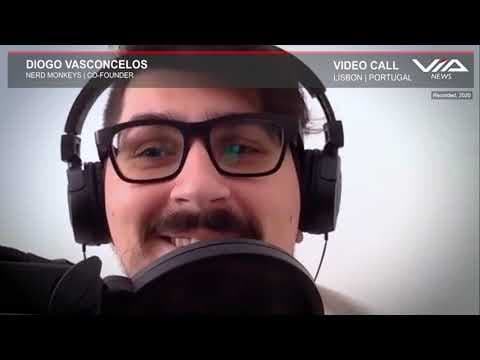
Diogo Vasconcelos, Co-Founder of Nerd Monkeys, told Via News that the commercial outlook for the games industry is positive, with consumers spending more, even as the move to remote working has made production harder and changed how developers win backing from publishers and investors. The interview was published by Via News on 8 December 2023.
Consumers spending more on games
Asked where the industry is heading, Vasconcelos said the answer depends on perspective. From the consumer side, he said, people are buying and playing more. He pointed to an article he had read noting that worldwide sales had last been this high in 2008, during the economic crisis of 2008 and 2009.
His explanation is value for money. Crises tend to push video games into a highly valued position, he said, because of the price against the hours of entertainment they provide. He drew the same comparison with Netflix and similar services. In 2008, he said, people stayed home because they could not afford holidays. Now they stay home because going outside is dangerous for them and for those around them, and they still need to be entertained.
On that basis he is optimistic about sales. "As an area like many creative areas and many areas where entertainment is a service or a product with long lasting entertainment hours, I think the future is positive commercially speaking," he said. The production side, he added, has brought many challenges.
Pitching to publishers moves online
Vasconcelos described how the industry normally raises money. Early in the year, studios go to business-to-business meetings to pitch publishers and investors and see whether their project connects. He had travelled in January and had planned further trips to events in the UK, Germany and Paris, each offering at least 20 minutes of undivided attention from someone who might help a business and its product succeed.
His own company had already closed a deal by then. "We were fortunate that at the beginning of the year we managed to close the deal," he said, noting that it usually takes a lot of time and effort. Those in-person moments have since disappeared, and he said a new way of doing business is emerging in which the same meetings take place by video conference.
He sees an upside in that shift. "It brings a new future of opportunities from people all around the world that have a lot of talents but are, for one reason or another, unable to invest in traveling, to go on a trip," he said. In his view, "in a way, in a positive way, the pandemic was an equalizer for many indie developers all around the world, so literally there's no limitation since it's all over the internet." He added that he tends to look at things in a positive light.
What remote networking loses
Vasconcelos was clear that the change has a cost. The moment where a developer has to hustle, he said, loses a great deal when there is no coffee, drink or dinner with someone just met. Follow-up has to happen differently. "Try and find and connect with people in a personal level also, that is much harder to do over a Skype call or a Zoom call or whatever call, it doesn't really matter," he said. He has seen many people in the industry struggle with that side of the work.
He expects the sector to cope. "We will adapt, that's part of the job, and those who are adapting really, really well, they will actually learn something new and grow from that point on," he said, adding that he believes the industry can gain a lot from a period in which everyone works from home.
His main reservation applies to every industry, not only games. "It's not sustainable to stay and work from home for too long of a period," he said, calling it the bleakest side of the situation. He said he felt somewhat depressed himself at being forced to stay at home for so long, although he noted that the effect depends on the person.
Watch the full interview
Interview by LM Salvado (Miguel Salvado) for Via News.