
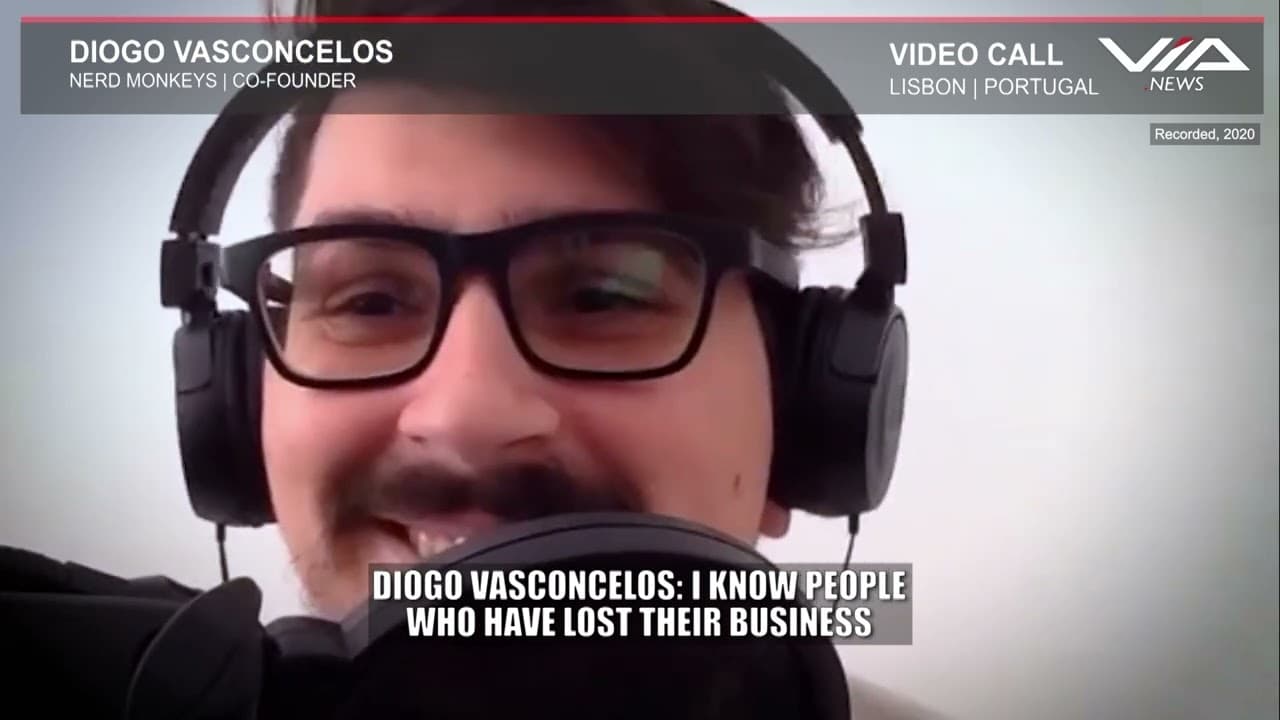
Diogo Vasconcelos, Co-Founder of Nerd Monkeys, has told Via News that European startups trying to recover from the pandemic should not expect financial support and should instead build businesses designed to withstand the worst. He said many young companies will not make it through, but that the founders who follow them will start out with a different outlook.
Asked how startups in Europe can bounce back and carry on trading, Vasconcelos said the biggest problem lies with the companies that had already launched and, in his words, started up in the worst possible timing. Those that depend heavily on the general state of the economy are the most exposed. He said they "most likely will not survive it", and he was blunt about the scale of the losses he expects.
"unfortunately I see that some there will be a lot of startups that will not survive this period"
Support is likely to go elsewhere
Vasconcelos said a young business faces a simple imbalance. Creating a company is easy, he said, while keeping it going is hard, and keeping it going through a pandemic is harder still, particularly for a business that depends on many outside factors and has no backing from government or from Europe.
He did not expect that backing to arrive for most startups, and said he understood why. "most financial supports will be and rightly so in my opinion directed towards industries and companies that are already very well formed and have a lot of people dependent on them". He added that he would still like to see more support aimed at startups, because for many founders this may be their first company, and starting out in a crisis makes an already difficult experience worse.
He spoke of the human cost as well. Vasconcelos said he knows people who have lost their businesses and others who lost very large deals because of the crisis. "they pour their everything into into those projects and companies so it's it's it's very hard not to relate it's very hard not to feel the the stress the anxiety".
Look for opportunity, but prepare for the worst
Despite that, Vasconcelos argued that startups which are still standing can do more than hold on. He said they can work to take advantage of opportunities that appear because of the changed conditions. He acknowledged that this may sound opportunistic, but said that anyone running a business has to think that way to some extent.
In his view the right mindset starts from accepting the new situation. "if you start looking at things like this is the new reality how can I make something with this", he said, and founders who think that way will manage.
His practical advice was to plan without outside help. "I would say do not count with any supports financial supports but make everything you can and make everything it's possible to to make sure that you create something create the business that's that it is prepared for the worst". He said he had tried to build that way himself before the crisis, but had not expected a full worldwide pandemic, and he wondered aloud whether he had been too conservative.
Vasconcelos also expects the next wave of founders to behave differently. New startups launched after this period will begin with a very different mindset, he said, shaped by caution and by an alertness that he thinks everyone will hold for a couple of years before it fades and people stop thinking it could happen again.
Learning from people with more experience
Asked for a final message, Vasconcelos urged founders to seek out advice from people who have run businesses before, including those much older and more experienced than themselves. "don't be afraid to ask someone that you know that has a business even if it's someone that is way way more experienced".
He said such advice can seem irrelevant when the other person sells a physical product rather than a service, or works in an entirely different field. In his view, businesses share common foundations. "there are many things in businesses that have the same roots they come from the same place". Asking for that kind of teaching may feel awkward, he said, but it is extremely useful.
He described his own habit as taking as much as he can from people who are willing to share what they know, and passing the same on to anyone who asks for his opinion. "I learn to to to take as much as possible possible from from those people that are willing to share something with me". That, he said, was his message to Europe's startup community.
Watch the full interview
Interview by LM Salvado (Miguel Salvado) for Via News.