
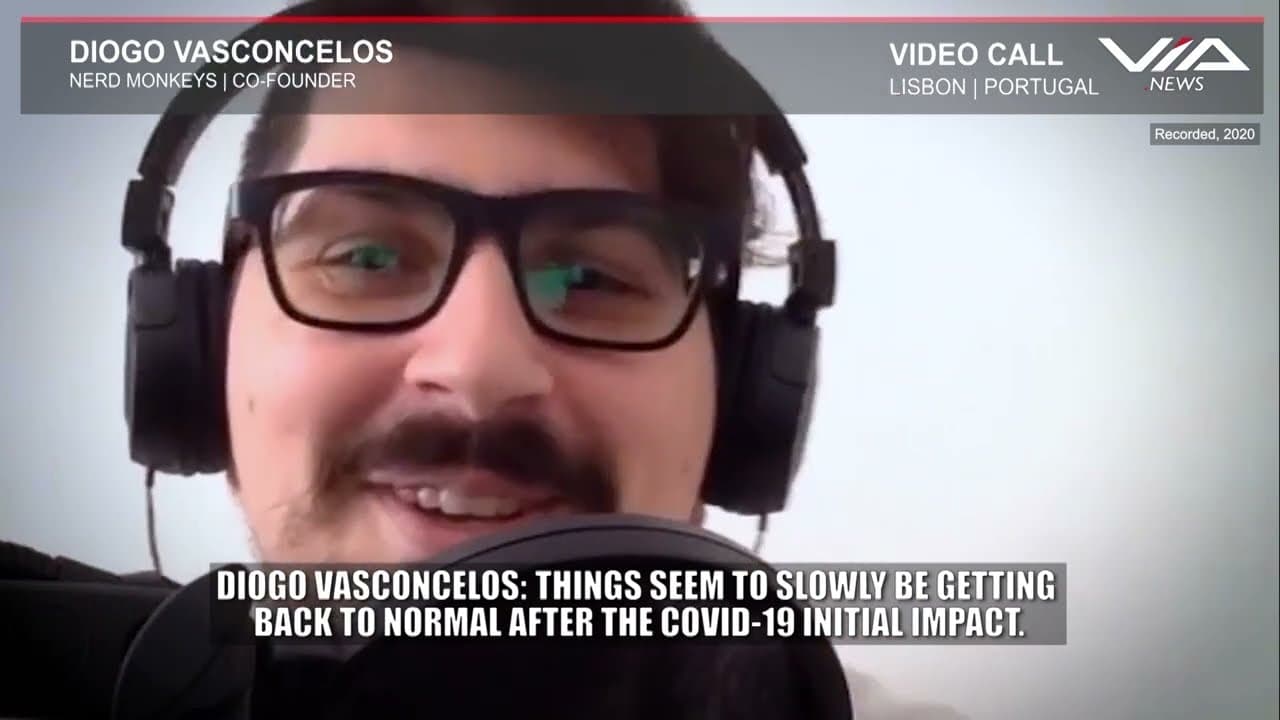
Diogo Vasconcelos, co-founder of game studio Nerd Monkeys, says the shift to home working during the coronavirus pandemic put his team roughly three weeks behind schedule, and that it has left the company with a new category of costs: cloud services it once tried to avoid.
Speaking to Via News, Vasconcelos said the timing was especially difficult because the studio had just secured funding for a project. "We closed the deal this February, so the timing couldn't be worse." The team was working at full pace and hiring new people when he decided to send everyone home. He said he also had the equipment moved out and had the whole workplace bleached as a precaution.
Three weeks lost to adapting
Moving game development into employees' homes meant buying new services and a period of adjustment for everyone. Vasconcelos put a figure on the cost to the schedule. "I would say that easily, we got three weeks late in our work, just because of that process of adapting."
He described those first weeks as very hard, but said the studio then settled into a steady rhythm. "But after that, it engaged into a nice flow of work, and we are now catching up on everything."
Asked whether the crisis had changed the company's strategy, he said the commercial model had not moved. "The business model itself, no, it doesn't change. We are still essentially a game studio." He noted that many studios and independent developers already work from home, while Nerd Monkeys had taken its own premises as it sought to grow.
Security, tools and new expenses
What did change, he said, was how the company handles security and internal systems. Material that had sat on a closed office network could no longer stay there, and even using VPNs created several layers of problems, so the company had to restructure how things are distributed internally. In his words, "softwares and content that we usually have on a closed network, we had to change that. It's not viable any longer, since everyone is working from home."
The studio had previously kept its software to a minimum and did not use Slack. That has changed. "Slack is a new tool that now it's part of the business, and probably will be for many times, for a long, long time."
The larger shift is financial. Vasconcelos said the company usually tries to keep as much as possible in-house, but remote work has altered that. "I would say that essentially cloud services are now absolutely essential for the company." He described the resulting charges as unexpected expenses that now arrive every month.
Lessons on preparation
Vasconcelos also recounted a smaller failure that compounded the disruption. The studio keeps a server on its premises, and he had not registered the replacement date of its UPS battery, which had a limited service life. The battery failed in March, just as power outages began to hit. In normal times, he said, buying a new battery would have been a quick fix, but that was not easy under pandemic conditions. The episode, he said, gave him more appreciation for the small details of every new item the company takes on.
I'm a firm believer that we learn from our mistakes, and I learn a lot of things during this transition.
His main conclusion was that the studio had not been ready for a scenario in which everyone works from home, and that three weeks of delayed work was too long for the project the team is building. He said preparation would pay off even if it is never needed in the same form, adding that even though he was not expecting a new pandemic, you never know what is going to happen in the future. He expects the company to become more efficient and quicker in its decision making as a result.
He also said the experience had changed how the team views the office. He had expected not to miss it in the first days, but said he now does, and that he believes most of his colleagues feel the same. The first week at home, he said, had felt lonely, which pushed the company to create new ways of staying in touch on a personal as well as a professional level.
Watch the full interview
Interview by LM Salvado (Miguel Salvado) for Via News.