
‘American Dreamers’ Sue Trump in Response to Repeal of DACA
Sonia Chauhan
September 23, 2017
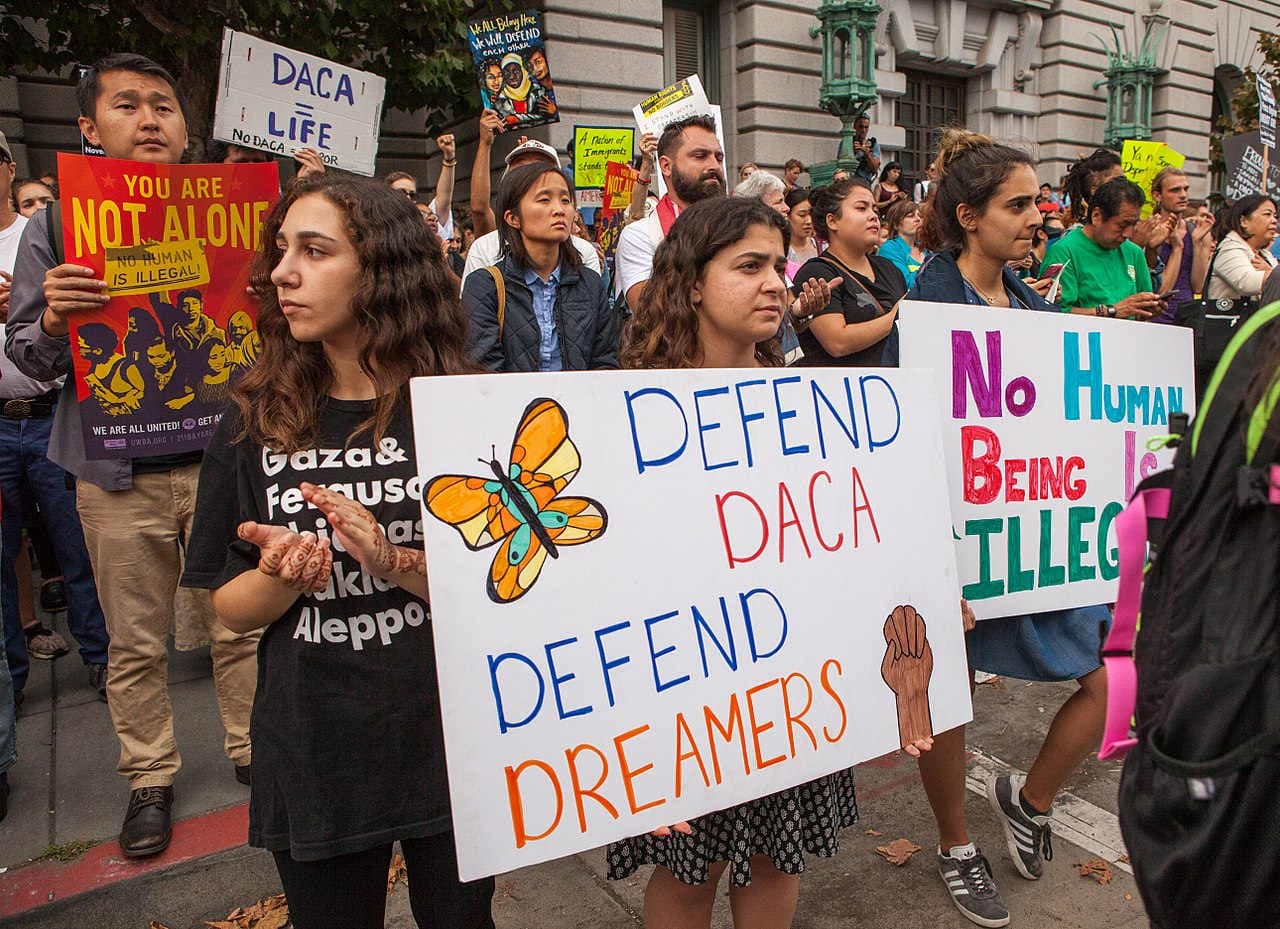
Throughout the 2016 U.S. presidential election, then-candidate Donald Trump ran on a hardline immigration platform that promised to increase border security and end the Deferred Action for Childhood Arrivals program (DACA). The time has arrived wherein President Trump is attempting to fulfill his promises to the American people, but not everybody agrees with his actions.
On Monday, a group of six immigrants filed a 46-page lawsuit in a San Francisco, California federal court, challenging Trump’s early September decision to end the DACA program. An Obama era policy that was implemented in 2012, DACA has provided 800,000 young immigrants with protection from deportation as well as the right to work legally in the United States.
Five of the six immigrants who filed the suit came to the United States from Mexico between the ages of 1 and 6, while the other came to the U.S. from Thailand at age 9. It is this sort of person, the one who was brought to the U.S. as a young child, that DACA intends to protect.
Referred to as Dreamers, those protected under DACA argue that the Trump administration did not follow proper administrative procedures in removing DACA, and that revoking enforcement promises made to a large group of people violates their due process rights. It is also suspected that the federal government is engaging in an “unconstitutional bait-and-switch”. Given that the federal government has vital information on each of the Dreamers, it now has the ability to use that information to find and deport them.
The lawsuit states that when DACA was first launched under Obama, the government vigorously encouraged young people to apply and said that personal information about themselves and family members would not be used against them for immigration purposes, unless there arose a special circumstance.
“The DACA program has meant not living in fear, and the opportunity to graduate from law school and build a business,” Dulce Garcia, one of the plaintiffs, stated. “And despite the administration’s cruel choice to end DACA, we know that our American dream shouldn’t have an expiration date.”
According to the lawsuit, Garcia came to the United States from Mexico as the four-year-old daughter of a hotel housekeeper and welder. She currently works as an attorney in San Diego, California.
The other plaintiffs include a UC San Francisco medical student and master’s candidate at Harvard, a Ph.D. candidate in clinical psychology at Fuller Theological Seminary, and two middle school teachers.
Chabolla Mendoza was brought to the U.S. from Mexico at the age of 2. She grew up in East Los Angeles and says that she only knows Mexico through stories from relatives. For all intensive purposes, she is just as much an American as she is a Mexican.
“Honestly, this is something I’ve been dreading since the election,” she said. “In my mind, I’ve tried to keep a positive frame of mind, like, we’ll be OK and push for larger immigration reform. Once there started being more concrete rumors about DACA being rescinded, I started being really anxious. … But I knew my next action would be to fight.”
The lawsuit also makes the case that Trump is ending the program because of his hostility towards Mexicans, who make up the majority of DACA applicants.
Trump’s “statements and actions reflect a pattern of bias against Mexicans and Latinos” states the lawsuit. It contains several tweets from the official presidential Twitter account, such as those that reference “anchor babies” and claim that “druggies, drug dealers, rapists, and killers are coming across the southern border”.
The group of six Dreamers is not the only one suing President Trump. Several other groups have filed lawsuits against the administration’s decision to repeal DACA. Fifteen states, the University of California, and civil rights activists from around the country have filed suits in opposition to the president’s decision.
Legal experts, however, have said that court challenges such as these face an uphill battle. The president has broad authoritative power in implementing immigration reform, especially when he is able to make the case for national security.
How this most recent lawsuit unfolds remains to be seen. What happens over the next few months will have a major impact on hundreds of thousands of lives in the U.S., and will certainly be an indication to the world regarding what America thinks of its young immigrants.