
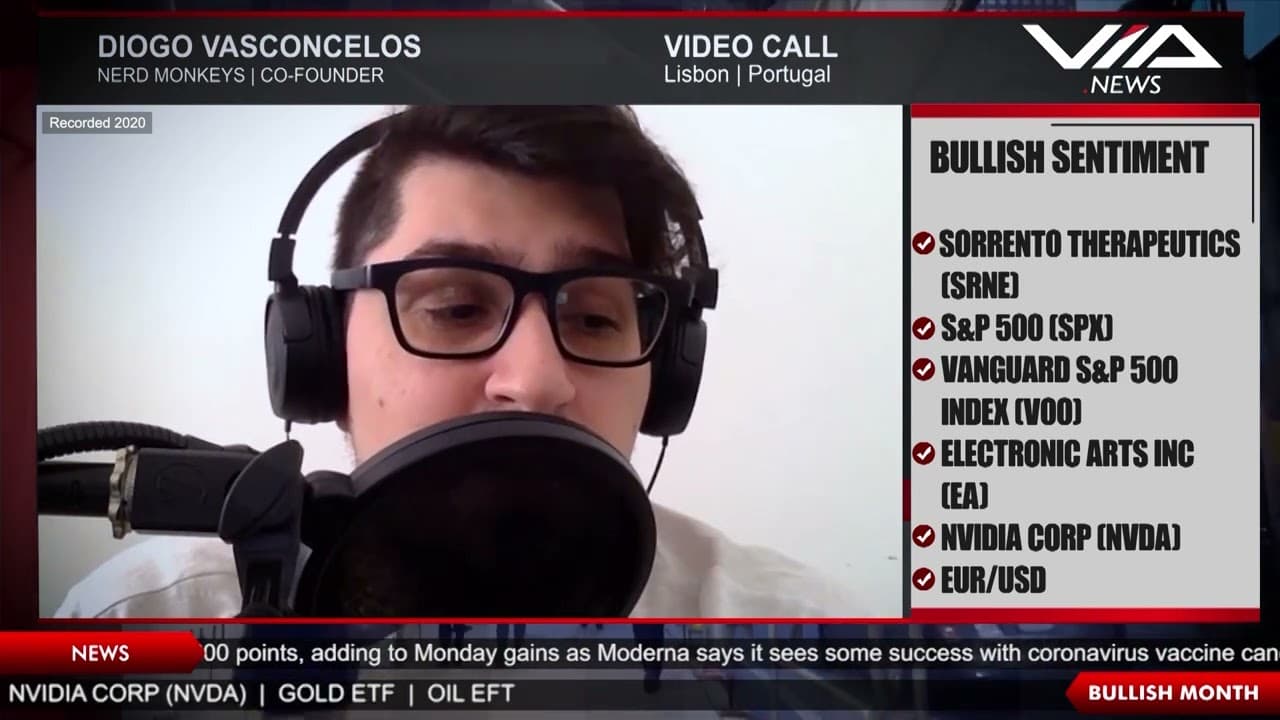
This interview was recorded about 2020.
Diogo Vasconcelos, Co-Founder of the game studio Nerd Monkeys, expects many young companies to fail in the economic fallout of the pandemic. Speaking to Via News about his experience as a startup founder, he said the hardest hit are those that started up at the worst possible time and depend heavily on the economy in general.
Startups under pressure
Vasconcelos said that creating a business is easy and keeping it going is hard, and that doing so during a pandemic, without support from governments or Europe, is harder still. "there will be a lot of startups that will not survive this period", he said.
He said that most financial support will, in his opinion rightly, go to established companies with many people depending on them, although he also believes startups in this position deserve more help. His advice to founders was not to count on financial support and to build a business prepared for the worst. He also said new startups formed after this period will begin with a more cautious mindset, at least until the alertness fades after a couple of years.
He acknowledged that it may sound opportunistic, but argued that a startup that already exists should look at the new reality and ask how to make something of it. People with that mindset, he said, will manage. He added that he knows people who lost their business or very big deals because of the crisis, and called it heartbreaking.
Three weeks lost moving to remote work
Vasconcelos described the timing for his own company as unfortunate. Nerd Monkeys had just closed a funding deal in February, the team was working at full speed and hiring, and then he sent everyone home. The studio had to buy new services to move game development into employees' homes. He said that "easily we got three weeks late in our work just because of that process of adapting", though the team has since settled into a good flow and is catching up.
The business model has not changed, he said, and Nerd Monkeys is still essentially a game studio. What changed was security and infrastructure. Software and content that the studio kept on a closed network could no longer stay there once everyone worked from home, and using a VPN created several layers of problems, so the company restructured how it distributes its material. Cloud services have become essential, he said, bringing monthly costs the studio did not expect, since it usually tries to keep as much in house as possible.
He also said a battery backup for a server in the studio, which he had forgotten to register, failed in March, just as power outages began. Ordinarily he would have bought a new one quickly, which was not easy at the time. The episode left him with a greater appreciation for small details and for being well prepared, including being faster in decision making, even if a similar scenario never returns.
Keeping a remote team together
On remote working, Vasconcelos said email alone is too slow, because a question that would take a couple of minutes in conversation can take a day or two as replies and counter replies pile up. His team now uses Jira to schedule weekly bursts of work, reviewed at the start of each week. On Wednesday and Friday mornings it also holds an informal session with no agenda, where staff bring their own coffee and talk, and the studio reserves at least half an hour for it. He said that "if you don't feel that you are working with other people you're just sending and receiving tasks", and that activity drops quickly without the human side of work.
He stressed that frequent contact is not micromanagement, and that the tool matters less than the habit of keeping in touch.
A positive outlook for games, with limits
On the industry, Vasconcelos said consumers are spending more on games, pointing out that crises tend to push video games up in value because of the hours of entertainment they offer for the price. "I think the future is positive, commercially speaking." Production, however, has brought many challenges. The meetings with publishers and investors that normally take place around events in places such as the UK, Germany and Paris are no longer possible, and pitching now happens by video conference.
He sees an upside in that. He said that "in a way, in a positive way, the pandemic was an equalizer for many individuals", including indie developers who could not afford to travel. But networking suffers, because the coffee or dinner that follows a meeting is hard to replace on a video call.
He also voiced concern about staying at home for long. He said that "it's not sustainable to stay and work from home for too long of a period", adding that he felt somewhat depressed at being forced to stay in.
don't be afraid to ask someone that you know that has a business even if it's someone that is way way more experienced
He closed by encouraging founders to seek advice from older and more experienced business people, since many business principles share the same roots even across very different products.
Watch the full interview
Interview by LM Salvado (Miguel Salvado) for Via News.